
RFQ Checklist
- Target joint axis and load inertia
- Continuous / peak torque requirement at speed
- Voltage, control mode, and protocol (EtherCAT/CAN)
- Mechanical interface drawing and cable routing constraints
High-precision integrated actuator module with harmonic reducer, encoder, and compact servo drive interface for articulated robot joints.
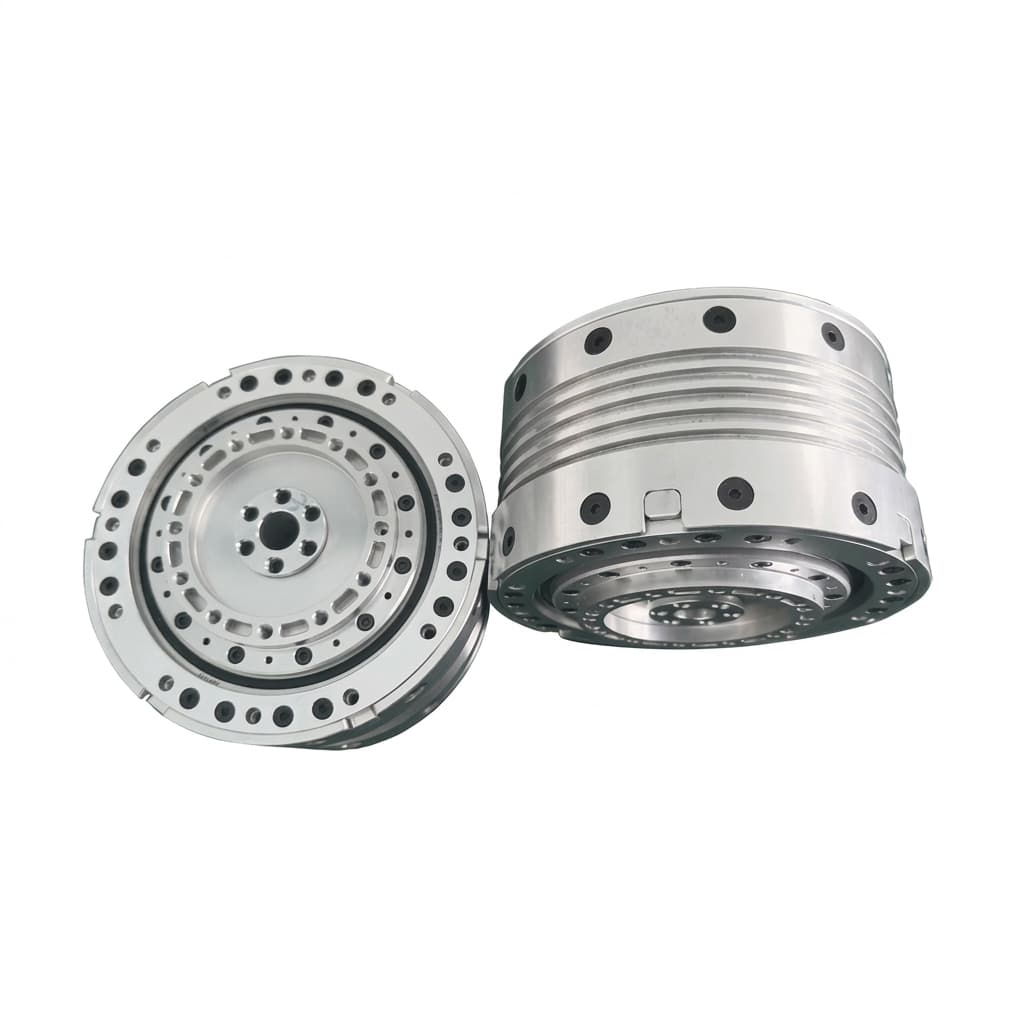
| Metric | Typical Range | Why It Matters |
|---|---|---|
| Backlash | < 0.1° (application dependent) | Backlash directly affects path repeatability and force-control smoothness. |
| Continuous Torque | 5-80 Nm class | Defines sustained output before thermal derating in cyclic production. |
Use this baseline for first-pass engineering comparison before requesting model-specific files.
| Field | Baseline Value | Interpretation Note |
|---|---|---|
| Supply Voltage | 24-48V DC | Matched per control architecture and duty profile. |
| Continuous / Peak Torque | Project-dependent harmonic class | Finalized by duty cycle and thermal verification. |
| Max Speed (No-load reference) | Application-tuned | Validated against target trajectory and control stability. |
| Encoder Resolution | Multi-turn absolute (model dependent) | Specified in detailed model-level technical package. |
| Communication | EtherCAT / CAN options | Scope confirmed during RFQ and integration planning. |
Detailed torque-speed envelopes and dynamic response evidence are provided in model-level engineering packages. Interpretation is tied to duty cycle, thermal constraints, and interface assumptions.
Request model-level STEP files and datasheets through the engineering resource workflow to ensure revision consistency.
Yes. We support connector pinout and harness customization with drawing revision control.
Yes. We provide model-level torque-speed boundaries and validation guidance during RFQ.
Engineering RFQ Email
Include torque-speed targets, annual volume, and timeline.
Lead Robotics Engineer
+86 18857971991
Direct technical conversation with our lead robotics engineer.