LogoRobot Joint Actuator
Start inquiry
LogoRobot Joint Actuator
Lead Engineer
LogoRobot Joint Actuator

China-based robot joint actuator factory supporting OEM customization, quality control, and global delivery.

Engineering RFQ Email

[email protected]

Email app

Include torque-speed targets, annual volume, and timeline.

Lead Robotics Engineer

+86 18857971991

Talk on WhatsApp

Direct technical conversation with our lead robotics engineer.

Products
  • Integrated Harmonic Joint Actuator
  • High-Torque Cycloidal Joint Actuator
  • Compact Planetary Joint Module
Applications
  • Humanoid Robot Joint Systems
  • Quadruped Robot Leg Actuation
  • Industrial Articulated Robot Retrofit
OEM Capabilities
  • OEM Joint Actuator Customization
  • Factory Quality & Compliance Program
  • Prototype-to-Mass Production
Quality & Compliance
  • Quality & Compliance Center
  • Testing and QA Process
  • Certificates and Compliance Documents
Engineering Resources
  • Engineering Resource Center
  • CAD / STEP Model Pack
  • Technical Datasheet Pack
Resources
  • Engineering Blog
  • About
  • Contact / RFQ
  • Privacy Policy
  • Cookie Policy
  • Terms of Service
© 2026 Robot Joint Actuator. All Rights Reserved.|Backed by Linkup Ai Co., Ltd. Manufacturing delivered by the Advanced Manufacturing Division of Linkup Precision.
Electric rotary actuator guide

12V DC rotary actuators sizing tool and RFQ report

Check whether 12V DC rotary actuators, a 12v 90 degree travel profile, or a 12v dc mini hollow rotary actuator package is a sensible starting point, then compare voltage, torque, duty-cycle, environment, RFQ risks, and micro package variants on one canonical page.

Run quick checkRead selection reportSend RFQ

12V rotary actuator quick check

Size a 12 volt electric rotary actuator profile

Enter the working load case to see whether 12 VDC is a reasonable starting point or whether the same electric rotary actuator requirement should move to 24/48 VDC or custom engineering review.

12 VDC is common for compact or mobile low-voltage systems.

Supported quick range: 5-500 Nm.

Use 90, 180, or 360 for common strokes.

High duty raises motor and gearbox thermal risk.

Used to estimate current from P = V x I.

Long 12 VDC runs need round-trip voltage-drop review.

Used only for first-pass copper voltage-drop screening.

Waiting for input

Default values are prefilled for a compact 12 volt electric rotary actuator scenario. Calculate to reveal fit, risks, and next action.

Report summary

Core conclusions for 12V and general electric rotary actuator selection

Queries for 12v dc rotary actuators, 12v 90 degree rotary actuators, or 12v dc mini hollow rotary actuators usually mean the buyer is filtering the same rotary actuator decision by voltage, travel angle, or mechanical envelope. Micro and hollow wording add space-constrained and pass-through constraints, but all these variants belong inside the wider sizing workflow instead of splitting the topic into a duplicate page.

Research-enhanced update: June 20, 2026. This revision separates source-backed conclusions from model-specific values that still require datasheet or supplier confirmation.

hollow

A “12v dc mini hollow rotary actuator” is a mechanical and voltage variant of the same decision.

The hollow shaft enables slip-ring and wire routing, while the 12V DC and mini size narrow the physical envelope, yet selection still requires verifying torque and current.

alias

“12v dc rotary actuators” are alias queries for the same canonical selection problem.

The phrase “12v dc rotary actuators” specifies low-voltage supply and rotary motion, merging into the canonical electric rotary actuator route without requiring a separate page.

1 URL

12 VDC is a voltage constraint, not a separate actuator category.

NIST defines an actuator by energy conversion into motion; voltage is one supply condition inside the same actuator selection workflow.

4 checks

Torque, speed, inertia, and duty cycle must be checked together.

Oriental Motor selection references require load inertia, required torque, speed, and acceleration torque checks for rotary motion.

P = I x V

Lower voltage raises current for the same electrical power.

OpenStax states electric power as current times voltage, so a 12 VDC system needs twice the current of 24 VDC at the same input watts.

90°

A 90 degree label is a travel signal, not proof of a common mechanical interface.

ISO 5211:2026 covers part-turn actuator attachments for industrial valves; robot joints, dampers, and compact gearmotor packages need different interface proof.

7 inputs

Supplier selection needs application evidence, not only catalog voltage.

Tolomatic lists orientation, distance, load, force, move time, cycle rate, and environment as basic electric actuator selection inputs.

OSHA

Low voltage does not remove machine and robot safety duties.

OSHA robot guidance warns that unexpected movement, stored energy, restricted-space work, and component malfunction remain hazards around actuators and end effectors.

model-specific

Premium hollow actuator voltage must be confirmed by exact model.

Public mini hollow actuator examples often publish specific supply, torque, speed, and gear-ratio limits. Do not infer native 12V compatibility without the exact datasheet or a custom winding confirmation.

transient

Transient motor current can create brown-out risk in 12V systems.

Stall and startup current are model-specific. The page treats bulk capacitance, isolated logic power, soft-start, connector resistance, and oscilloscope validation as RFQ checks rather than universal numeric guarantees.

Alias merge

Why 12v dc rotary actuators and 12v 90 degree rotary actuator queries stay on this canonical URL

The alias does not change the engineering job. A 90 degree rotary actuator still has to pass the same voltage, torque, inertia, duty-cycle, environment, and control checks before a buyer can choose a catalog actuator or request a custom package.

Alias query12v / 90 degreeCanonical toolelectric rotary actuatorRFQ evidencetorque / duty / environmentOne URL answers the 12 VDC 90 degree variant and the broader electric rotary actuator decision.
Search phraseCanonical routeMerge reasonWhat to do next
12v dc mini hollow rotary actuator/learn/electric-rotary-actuatorA hollow bore provides a mechanical pass-through for slip rings or wires, while 12 VDC and mini sizing are envelope filters within the same canonical sizing path.Verify hollow shaft inner diameter, slip ring compatibility, continuous and peak torque, current draw, and environment ratings.
12v dc rotary actuators/learn/electric-rotary-actuatorLow-voltage DC supply and rotary output specify a power variant within the same actuator selection workflow.Check output torque, current limits, voltage drop, and duty cycle under the 12V DC input constraint.
12v 90 degree rotary actuator/learn/electric-rotary-actuator12 VDC supply and 90 degree travel are actuator-selection filters, not a separate actuator family.Use the tool with 12 VDC and 90 degrees, then confirm torque, duty cycle, cable length, and enclosure.
12v 90 degree rotary actuator micro/learn/electric-rotary-actuatorMicro package size narrows envelope and torque assumptions, but the sizing method and canonical intent remain the same.Add package envelope, shaft interface, backlash, holding behavior, and life-test targets to the same RFQ.
electric rotary actuator/learn/electric-rotary-actuatorCanonical intent covers the actuator category, voltage variants, sizing logic, and RFQ evidence in one page.Compare 12/24/48 VDC options before selecting a catalog or custom engineering path.

Hollow Shaft Integration

Hollow shaft wire routing and slip ring integration guidelines

A key mechanical variant for the 12v dc mini hollow rotary actuator is the hollow shaft itself, which allows wires, slip rings, lasers, or pneumatics to pass through. Sizing must account for mechanical clearance limits and slip ring contact resistance to ensure system longevity.

Stator / DriveStator / DriveSlip RingRotating Hollow Shaft (mini through-bore to large table class)Stationary Outer HousingStationary Outer HousingCables Pass-Through (Laser / Air / Control Harness)
Hollow aperture sizeRecommended slip ring capsuleTypical application pathRouting and current limits
Ø6 mm - Ø10 mm class mini hollow boreUsually direct pass-through or a vendor-matched micro capsuleDirect cable pass-through for small sensor, fiber optic, or laser pathsConfirm wire gauge, cable OD, bend radius, rotation angle, strain relief, and slip-ring need from the exact cable and actuator datasheets. Continuous rotation usually needs a slip ring or alternate feedthrough strategy.
Ø11 mm - Ø19 mm compact hollow boreMini capsule slip ring only after circuit and current reviewDC power (sensor grade) and encoder signal pass-throughSeparate motor power from encoder or fieldbus signals, specify shielding and twist requirements, and confirm torsion-rated cable bend radius with the cable supplier.
Ø20 mm - Ø33 mm compact table classStandard capsule or through-bore slip ring if rated for dutyMulti-axis robot wrist power (5A-10A) and EtherCAT feedthroughUse shielded twisted pairs for communication, separate power and signal paths, and request slip-ring dynamic contact resistance and life data for the target current.
Ø50 mm - Ø100 mm large table classLarge hollow slip ring after pneumatic, fluid, and current reviewHeavy automated index tables with pneumatic, vacuum, and high-power linesDefine fluid or pneumatic line size, conductor temperature, signal isolation, service loop, rotation duty, and inspection access before treating the bore as usable capacity.

Evidence upgrades

What this report verifies before you shortlist a 12V actuator

The 12 volt query belongs inside the broader electric rotary actuator workflow, but voltage advice needs evidence. The checks below show which claims are backed by public sources and which values remain model-specific.

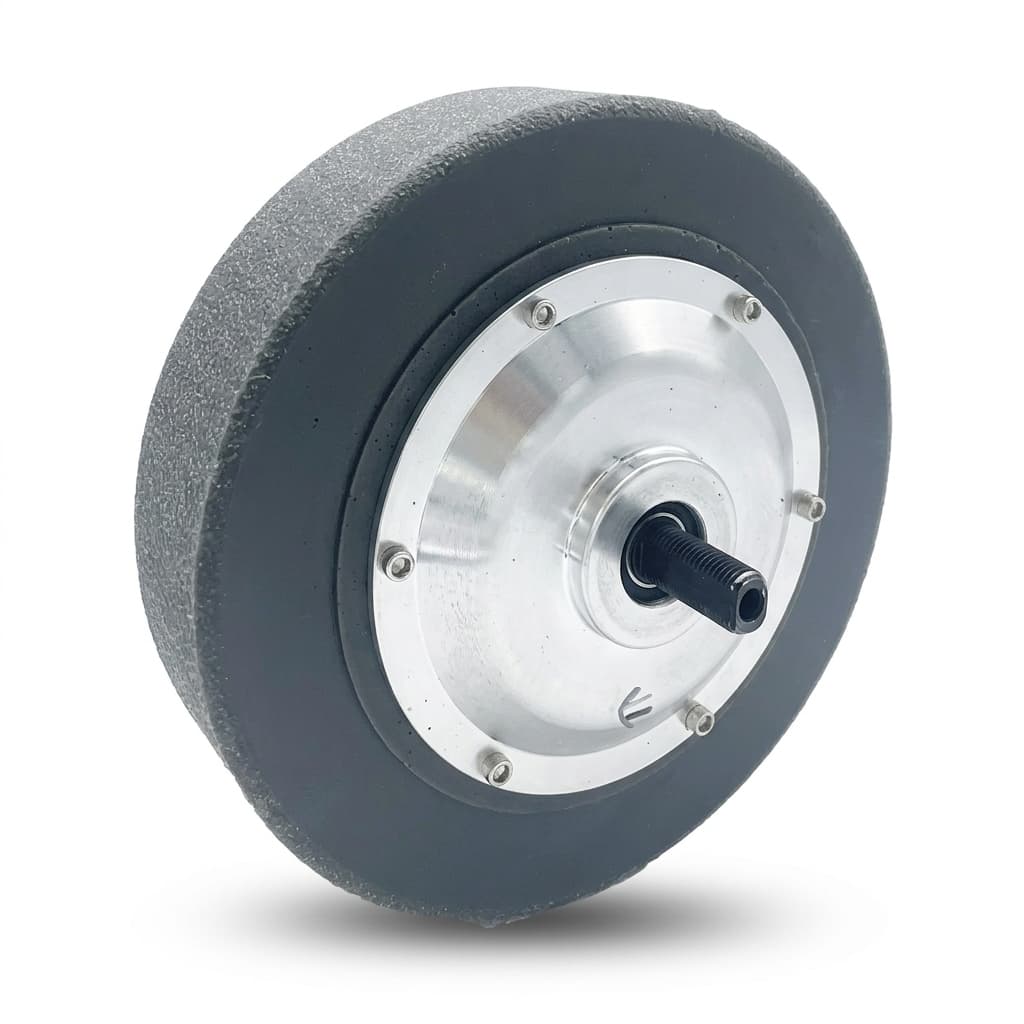
High torque electric rotary actuator module for robot joint review
High-torque rotary actuator package used for torque and envelope discussion.
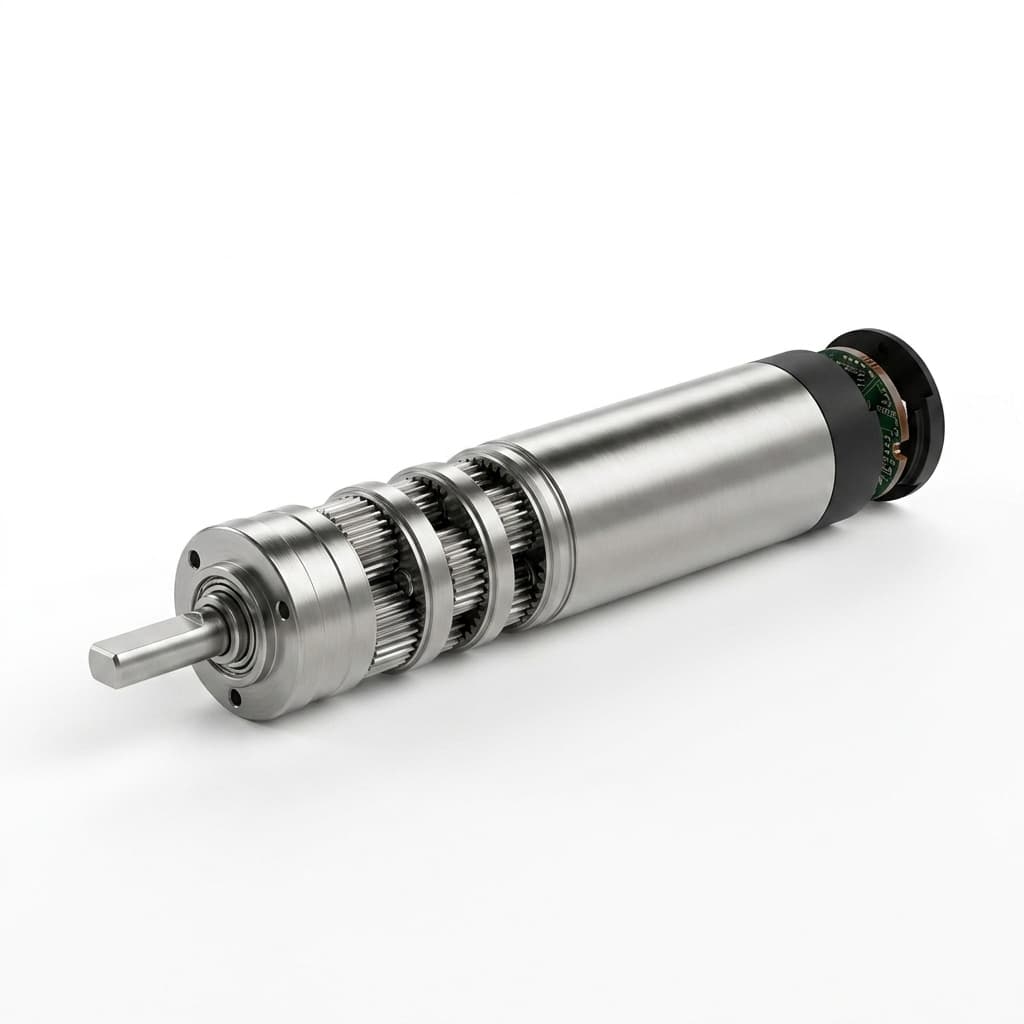
Zero backlash rotary actuator output stage for precision positioning
Precision rotary output stage where backlash and stop accuracy must be datasheet-confirmed.
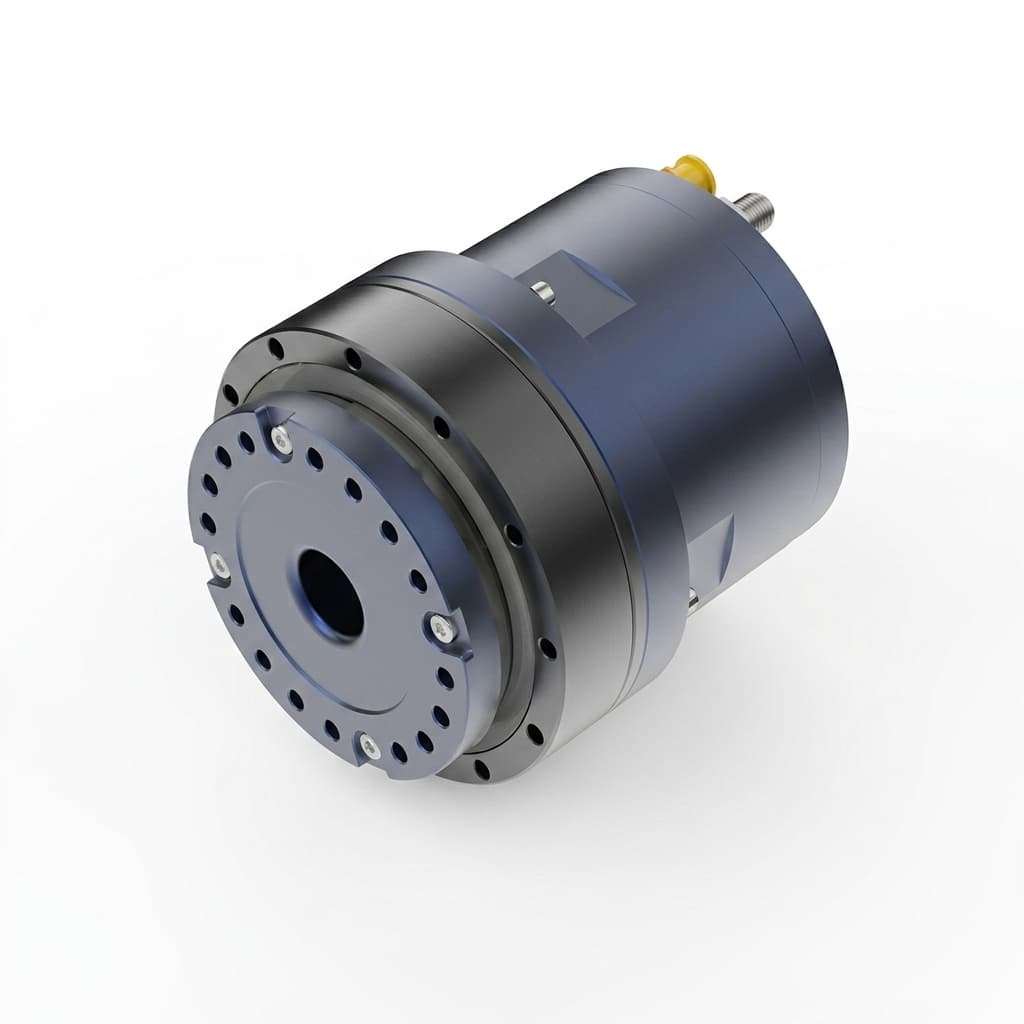
Integrated robot joint actuator assembly for electric rotary motion
Integrated robot-joint actuator example for interface and harness review.
Decision riskEvidence added
Stage1b audit found the page had evidence, but the highest-risk 12 VDC wiring claim was still too genericAdded conductor cross-section to the tool and now calculates a first-pass round-trip copper voltage drop from input power, voltage, cable length, and conductor area.
The 90 degree wording could still imply a universal quarter-turn actuator interfaceAdded explicit valve, damper, robot-joint, and hinge boundaries using ISO 5211:2026 and a 2024 Belimo datasheet as application-specific evidence, not universal proof.
Open public data limits were present but easy to missAdded a pending-evidence register for universal torque ranges, life, backlash, holding, enclosure, and safety claims so unsupported conclusions stay marked as unconfirmed.
Alias query could look like a separate micro-actuator pageMapped 12v 90 degree rotary actuator to the canonical electric rotary actuator sizing workflow because voltage and 90 degree travel are filters inside the same selection decision.
Voltage conclusion lacked physics evidenceAdded OpenStax-backed P = I x V examples showing why 12 VDC can create higher current than 24/48 VDC at equal input power.
Selection method treated torque as the main screenAdded Oriental Motor and Tolomatic evidence that inertia, speed, cycle rate, duty cycle, and environment are first-pass sizing inputs.
Environment guidance was genericAdded NEMA Type 3, 4, and 4X boundaries so outdoor, washdown, and corrosion claims are not mixed together.
Catalog-specific performance could be over-impliedAdded explicit public-data limits: exact torque, life, backlash, IP/NEMA, brake holding, and duty values remain datasheet-confirmation items.
12 VDC wiring guidance stopped at current comparisonAdded a voltage-drop screen using Ohm law, round-trip cable resistance, and explicit RFQ inputs for cable length, connector count, fuse, and current limits.
The tool did not turn wiring risk into an interactive resultAdded estimated input power, one-way cable length, and conductor area fields so 12 VDC current and voltage-drop stress can change the fit score and next-step explanation.
Holding and safety behavior was under-specifiedAdded brake and load-holding boundaries from Rockwell and Tolomatic: holding brakes are for stationary loads and model-specific confirmation, not a substitute for positive load locking.
90 degree quarter-turn intent could be over-generalizedAdded ISO 5211:2026 and Belimo datasheet examples to separate valve/damper part-turn interfaces from robot-joint or compact gearmotor requirements.

Suitable and unsuitable use

Good fit

  • Battery or vehicle systems already standardized on 12 VDC.
  • Moderate torque, intermittent duty, and short cable runs.
  • Simple quarter-turn or half-turn positioning.

Poor fit

  • High current draw caused by high torque at 12 VDC.
  • Continuous or high-frequency cycling without thermal review.
  • Outdoor, washdown, or safety-stop requirements left undefined.

Selection methodology

MotionLoadElectricalInterfaceRFQ
StepInputsOutput
1. Bound the motionAngle, travel time, stop accuracy, duty cycleMotion profile and thermal exposure
2. Bound the loadOutput torque, breakaway torque, inertia, shock factorContinuous and peak torque target
3. Bound the electrical system12/24/48 VDC supply, controller, cable length, protectionVoltage and current feasibility screen
4. Bound integration riskMounting, shaft, enclosure, feedback, certification needsRFQ package and test plan

Evidence map for the 12V decision

The 12 volt electric rotary actuator decision should not be reduced to a voltage label. It combines the actuator category definition, electrical power limits, motion sizing inputs, and the enclosure boundary required by the actual application.

DefinitionNISTPower mathOpenStaxSelectionSuppliersEnvironmentNEMA12 VDC recommendation = category definition + power math + application inputs + environment boundary
SourceDate markerHow used hereLink
NIST CSRC Glossary, actuator termNIST SP 800-82 Rev. 3 source; checked June 17, 2026Defines actuator by source energy and motion/control function; supports treating 12 VDC as a supply variant.Source
Harmonic Drive FHA-C Mini 24VDC datasheet exampleManufacturer datasheet example; checked June 20, 2026Shows that supply voltage, torque, speed, gear ratio, and brake options are exact-model claims. The page uses this as a confirmation boundary, not as proof that every premium mini hollow actuator is or is not native 12V.Source
Industrial flexible-cable bend-radius guidanceCabling design guidelines; checked June 20, 2026Supports treating bend radius, strain relief, shielding, and torsion rating as cable-datasheet checks. Exact static and dynamic multipliers vary by cable construction and duty cycle.Source
Texas Instruments bulk capacitor sizing for DC motor drive applicationsApplication report SLVAFT0, July 2024; checked June 20, 2026Supports local bulk capacitance, separate logic power, and soft-start as mitigation patterns. Exact stall multiplier, capacitance, ESR, and undervoltage margin remain project-specific.Source
OpenStax Physics, electric power equationsOpenStax page published 2019; checked June 17, 2026Uses P = IV and V = IR to explain why equal input power at 12 VDC requires more current than 24/48 VDC.Source
Tolomatic electric actuator FAQSupplier FAQ checked June 17, 2026Lists orientation, distance, load, force, move time, cycle rate, and environment as basic application data for selection.Source
Tolomatic motor integration guideSupplier guide checked June 17, 2026Frames continuous duty as time-average work that contributes to heat in the actuator and drive.Source
Oriental Motor rotary actuator selection calculationsCatalog reference checked June 17, 2026Documents load inertia, acceleration torque, required torque, speed-torque checking, and safety-factor steps for rotary selection.Source
ISO 5211:2026, industrial valve part-turn attachmentsPublished 2026; checked June 17, 2026Sets the boundary for industrial valve part-turn actuator attachments, flange dimensions, driving component dimensions, and interface torque references.Source
IEC public IP ratings explainer for IEC 60529IEC page checked June 17, 2026Separates solid-object/dust protection from liquid ingress protection, avoiding vague waterproof claims.Source
NEMA enclosure type guideNEMA document checked June 17, 2026Separates indoor, outdoor, hose-directed water, windblown dust, and corrosion protection claims.Source
OSHA Technical Manual, industrial robot safetyOSHA page checked June 17, 2026Supports the warning that unexpected robot movement, actuator energy, restricted spaces, and end-effector hazards remain integration risks.Source
Rockwell Automation Safe Brake Control application techniquePublication SAFETY-AT178C-EN-P, February 2021; checked June 17, 2026Frames holding brakes as devices for stationary disabled loads and separates holding from stopping a moving load.Source
Victron Energy Wiring Unlimited, DC voltage drop theoryTechnical book page checked June 17, 2026Shows that cable resistance creates voltage drop and heat, and that 12 VDC loads need round-trip conductor review.Source
JVL conversion and calculation note, voltage dropTechnical PDF checked June 17, 2026Uses a DC voltage-drop formula with the return conductor and copper resistivity around 0.01724 ohm mm2/m; supports the quick copper drop screen.Source
Belimo DRC24A-7 rotary actuator datasheetDatasheet dated September 13, 2024; checked June 17, 2026Shows a real 24 V, 35 s/90 degree butterfly-valve actuator example and warns that non-constant torque and application release can be product-specific.Source

Voltage and alternative comparison

12 VDCCompact / mobiletorque / duty margin24 VDCFactory defaulttorque / duty margin48 VDCHigher margintorque / duty margin

Public supplier catalogs vary by model, so exact torque and duty values must be confirmed against datasheets. The comparison below keeps known decision logic separate from unknown vendor-specific limits.

OptionBest forWatch itemDecision note
12v 90 degree rotary actuator / 12 VDC electric rotary actuatorCompact quarter-turn machines, mobile equipment, prototypes, low-voltage cabinetsCurrent draw, thermal rise, torque headroom, cable dropUse when torque and duty remain moderate.
24 VDC electric rotary actuatorIndustrial control panels, moderate torque, repeatable automation cyclesPower supply sizing, brake voltage, controller compatibilityDefault shortlist for many factory automation projects.
48 VDC electric rotary actuatorHigher dynamic response, larger torque class, servo-like controlSafety design, drive selection, heat dissipationReview when 12/24 VDC has insufficient thermal or torque margin.
Pneumatic rotary actuatorSimple open-close motion where compressed air already existsAir supply, leakage, positioning precision, maintenanceCompare only when electrical position control is not required.

90 degree quarter-turn boundary: valve, damper, robot joint, or hinge

The phrase 12v 90 degree rotary actuator can describe several different jobs. A valve buyer cares about part-turn attachment and breakaway torque, an HVAC buyer may mean a damper actuator, a robot builder needs inertia and feedback proof, a micro-package buyer needs envelope and heat limits, and a hinged-panel design may actually need a linear actuator geometry check.

ValveISO 5211Dampercatalog stopRobot jointinertia + feedbackHingegeometry first90 degree travel is shared language; interface proof changes by application.
ContextSource-backed factLimit / counterexampleDecision action
Industrial valve quarter-turn actuatorISO 5211:2026 covers part-turn actuator attachments for industrial valves, including flange dimensions, driving component dimensions, and interface torque reference values.It does not prove that a compact 12 VDC robot-joint actuator shares the same shaft, bearing, feedback, or housing requirements.If the load is a valve, request ISO 5211 flange size, drive coupling, breakaway torque, running torque, end torque, and supplier-purchaser interface agreement.
HVAC damper or butterfly-valve actuatorBelimo public datasheets show 24 V rotary actuators with 90 degree travel, published torque, running time, and application limits.A 24 V damper or butterfly-valve actuator is not evidence that a 12 V micro actuator can meet the same torque, speed, duty, or interface duty.Treat catalog damper/valve examples as application-specific benchmarks, not as universal micro actuator proof.
Robot joint or fixture indexerRotary sizing guidance requires inertia, acceleration torque, required torque, speed, stop accuracy, and position holding checks.There is no reliable public universal torque, backlash, life, or holding-brake dataset for every 12 V micro 90 degree rotary actuator.Ask for torque-speed curve, backlash, bearing loads, encoder resolution, brake behavior, life test conditions, and controller limits.
Linear actuator driving a hinged panelA hinge can move through 90 degrees while the purchased actuator is still linear, not rotary.The search phrase can hide a geometry problem; torque at the hinge changes with mounting angle and lever arm.Use a hinge-force calculation when the actuator pushes a lever or door, then shortlist rotary hardware only if direct rotary output is required.

Bearing & Load Capacity

Mechanical bearing configurations and moment load limits in hollow rotary tables

Hollow rotary actuators must carry external loads. Sizing requires reviewing axial force and overturning moment rigidity, which are highly bearing-dependent. Standard mini sizes use ball bearings, whereas larger or robotic joint platforms integrate heavy-duty cross-roller bearings.

Deep-Groove Ball Bearing SupportRadial: OKAxial: LightMoment Load Capacity: Low (Susceptible to Tilt)Cross-Roller Bearing SupportAxial + thrust reviewHigh Moment Rigidity (Resists Cantilever Overturning)Cross-roller bearings support simultaneous radial, axial, and overturning moment loads.
Bearing configurationAxial or thrust load reviewMoment load reviewIdeal application scenario
Deep-groove ball bearing supportModel-specific; usually reviewed for light thrust casesModel-specific; poor fit for high offset or cantilever moment unless datasheet allows itSimple flat index plate, belt drive pulleys, direct axial coupling alignment.
Cross-roller bearing supportDatasheet-confirmed radial, axial, and moment ratings requiredBetter suited to combined loads, but allowable moment and life are still exact-model calculationsArticulated robot arms (joints), high-load indexers, direct-mount robot wrists.

Why 12 VDC can become a current and heat problem

For the same electrical input power, current rises as voltage falls. These examples use ideal input power only; real actuator efficiency, motor current limits, wiring resistance, and duty cycle still need datasheet confirmation.

12 VDC Supply System (Higher Current Review)12V SourceHigh I²R Heat (20A / 1.5mm²)ActuatorV_term: 9.6V (20% Drop)48 VDC Supply System (Lower Current Review)48V SourceLow Heat Loss (5A / 1.5mm²)ActuatorV_term: 47.4V (1.2% Drop)At equal power (240W input), wiring heat follows I²R, so lower voltage requires more current review.
Input power case12 VDC current24 VDC current48 VDC currentDecision implication
120 W input power10.0 A5.0 A2.5 ASmall battery machines may accept this, but connector and cable voltage drop must be checked.
240 W input power20.0 A10.0 A5.0 AAt this level, a 12 VDC shortlist needs explicit thermal and wiring review.
480 W input power40.0 A20.0 A10.0 AOften a trigger to review 24/48 VDC unless the system bus is fixed and well protected.

12 VDC wiring screen before the actuator shortlist

A 12 volt electric rotary actuator can be the right package, but the harness has to be sized from actual current and cable length. Public electrical theory supports the voltage-drop mechanism; exact connector resistance, stall current, fuse behavior, and allowable terminal voltage remain model-specific and are marked for RFQ confirmation.

The quick examples below use Vdrop = I x (2 x length x copper resistivity / conductor area) with a 20 C copper approximation. They are screening numbers only; connector resistance, conductor temperature, fuse/relay loss, and allowable terminal voltage remain pending until the exact harness is known.

Screening caseCurrentRound-trip copper resistanceVoltage dropDecision implication
120 W, 12 VDC, 2 m one-way, 1.5 mm2 copper10.0 A0.047 ohm0.47 V / 3.9%Usually workable as a screen, but connector and temperature losses still need RFQ confirmation.
120 W, 12 VDC, 5 m one-way, 0.75 mm2 copper10.0 A0.233 ohm2.33 V / 19.4%Strong warning: long, small-gauge 12 VDC harness can starve the actuator terminals.
240 W, 12 VDC, 5 m one-way, 1.5 mm2 copper20.0 A0.117 ohm2.33 V / 19.4%Often a reason to shorten cable, increase copper area, or review 24/48 VDC.
CheckDecision dataWhy it mattersRFQ action
Current from input powerPower target, supply voltage, peak and continuous currentAt equal input watts, 12 VDC draws twice the current of 24 VDC and four times the current of 48 VDC.Ask for peak current, continuous current, controller current limit, fuse size, and supply droop tolerance.
Round-trip cable resistanceOne-way cable length, conductor size, copper temperature, return pathDC voltage drop uses the full positive and negative conductor path; long 12 VDC runs can lose meaningful voltage before the actuator terminals.Calculate Vdrop = I x R for the complete circuit and confirm terminal voltage at peak current.
Connector and crimp lossesConnector count, contact rating, seal type, vibration exposureA low-resistance connector looks harmless at small current but can become a heat and voltage-drop point at higher 12 VDC current.Include connector series, pin current rating, harness drawing, and inspection requirements in the RFQ.
Protection and recoveryFuse, breaker, reverse polarity, stall current, restart behaviorA stalled rotary actuator can draw far more than a steady move case; protection must clear faults without nuisance trips.Confirm locked-rotor or stall current, protection coordination, and controller fault behavior with the supplier.

Holding torque, brake, and backdrive boundary

Many buyers ask whether a 12 VDC rotary actuator can hold position without power. The answer is not public-data universal. It depends on gearing, brake design, load direction, wear, duty cycle, and the safety consequence of a dropped or backdriven load.

TopicSource-backed boundaryPage decision
Holding a stationary loadRockwell frames motor holding brakes as devices for keeping a disabled stationary load in place, not as the primary way to stop moving inertia.Ask whether the 12 VDC rotary actuator uses self-locking gearing, an electromagnetic brake, or both.
Vertical or gravity-loaded axesSupplier brake guidance commonly treats vertical loads as a special case requiring brake and backdrive confirmation.Do not accept "holds position" as enough; request holding torque, brake voltage, engage time, release time, and positive-lock requirements.
Operator-under-load casesTolomatic cautions that a friction brake is not a positive lock for supporting heavy loads while an operator is under the load.Flag these as machine-safety cases requiring independent locking, guarding, or a different architecture.

Risk limits and controls

RiskImpactControl
Misusing 12 VDC as a universal requirementA 12 volt electric rotary actuator may need high current at elevated torque, creating heat and voltage-drop problems.Validate peak and continuous current, cable length, duty cycle, and allowable temperature rise.
Selecting on holding torque aloneThe actuator may meet static holding but miss acceleration, impact, or stop-position requirements.Specify running torque, breakaway torque, peak torque, travel time, and load inertia.
Ignoring enclosure and environmentOutdoor or washdown use can change seal design, corrosion protection, connector choice, and warranty scope.Define dust, splash, temperature, vibration, and cleaning exposure before model selection.
Assuming all rotary actuators are servo actuatorsOn/off units, analog-positioning units, and fieldbus servo units carry different controller and feedback requirements.Match control mode to stop accuracy, feedback, network, and commissioning workflow.
Treating duty cycle as only a controls settingContinuous or high-cycle operation increases actuator and drive heat, even when peak torque looks acceptable.Separate motion segments, calculate time-average work, and ask the supplier to confirm continuous ratings.
Confusing outdoor, washdown, and corrosion protectionAn outdoor enclosure class may not cover hose-directed water or corrosive cleaning exposure.Specify the expected NEMA or IP target, cleaning method, connector sealing, and corrosion exposure in the RFQ.
Letting a low voltage label soften safety reviewUnexpected robot motion, stored energy, vertical loads, and maintenance work inside a restricted space can still injure people even when the actuator supply is 12 VDC.Run the actuator inside the machine risk assessment, define lockout and guarding, and verify brake or stop functions with the exact model and controller.

Safety boundary: 12 VDC does not close the risk assessment

The public evidence supports a narrower conclusion: 12 VDC changes electrical current and wiring behavior, but it does not prove that a robot joint, end effector, or machine axis is safe. Any final safety claim is pending confirmation until the application, controller, guarding, brake, load, and maintenance procedure are reviewed together.

BoundaryEvidenceDecision rule
Robot or machine restricted spaceOSHA notes that workers may need to enter restricted spaces while actuators, valves, sensors, end effectors, or other energy sources are available.Treat actuator selection as part of the cell risk assessment, not just a component purchase.
Unexpected movementOSHA identifies unexpected robot movement, program changes, and component malfunction as contact and crushing hazards.Specify stop behavior, restart behavior, guarding, lockout, and controller fault handling before purchase.
Low-voltage powerThe public sources support lower-voltage current and wiring checks, but not a blanket claim that 12 VDC is safe by itself.Mark final safety category, brake proof, and compliance claims as pending confirmation until the exact application and model are known.

Environment boundary: indoor, outdoor, washdown, corrosion

Public enclosure definitions are useful for framing the RFQ, but a final actuator choice still needs the exact product rating, connector rating, shaft seal detail, and warranty scope.

ConditionSource boundaryPage decision
Indoor cabinet or protected machineNEMA Type 1/12-style thinking may be relevant.12 VDC can remain on the shortlist if torque, duty, and wiring are moderate.
Outdoor rain, sleet, windblown dust, ice exposureNEMA Type 3 families target outdoor weather exposure.Ask for outdoor-rated enclosure, connector, cable gland, and temperature limits.
Splash, coolant, or hose-directed washdownNEMA Type 4 covers hose-directed water; Type 4X adds corrosion protection.Do not assume an ordinary outdoor actuator is washdown-safe.

Scenario examples

Battery-powered access panel

12 VDC bus, 20-35 Nm output torque, 90 degree motion, micro package target, intermittent duty

A 12 VDC rotary actuator can be a reasonable shortlist if current draw and manual override are acceptable.

Industrial diverter gate

24 VDC controls, 80-160 Nm torque, dusty environment, repeated cycles

Treat 12 VDC as a poor default; review 24 VDC or 48 VDC for thermal and current margin.

Robot fixture indexer

180 degree indexing, feedback required, moderate shock load

Prioritize backlash, feedback, holding brake, and controller compatibility over voltage label alone.

Quarter-turn valve retrofit

90 degree travel, valve stem interface, weather exposure, open-close control, unclear breakaway torque

Start with valve torque and interface standard evidence. A micro 12 V actuator remains pending confirmation until ISO 5211 fit, enclosure, and breakaway torque are proven.

Data sources and evidence boundary

Stage1b audit result: the page already answered the alias merge, but several decision-impacting statements needed stronger source-to-use mapping. The table below records what changed in this round and which claims remain bounded rather than overstated.

Audited gapWhy it affects selectionEvidence addedPage update
Claim: 12 VDC can become a wiring problemThe previous page explained current stress, but did not let the visitor test cable length and conductor area.OpenStax power equations, Victron 12 V voltage-drop example, and a copper round-trip drop formula using public technical notes.The tool now estimates current, round-trip copper resistance, voltage drop, and voltage-drop percentage.
Claim: 90 degree travel is not enough to choose hardwareA buyer may be comparing valve actuators, dampers, robot joints, or a linear actuator pushing a hinge.ISO 5211:2026 limits its scope to industrial valve part-turn attachments; Belimo publishes a 24 V, 35 s/90 degree butterfly-valve actuator with product-specific limits.The quarter-turn table now separates valve, damper, robot-joint, and hinge decision actions.
Claim: catalog data cannot close the RFQ aloneTorque, brake holding, ingress rating, backlash, cycle life, and controller limits are model-specific.Tolomatic selection inputs, Oriental Motor rotary sizing guidance, Rockwell brake application notes, IEC IP boundary, and OSHA robot risk-assessment guidance.The page adds explicit pending-evidence rows and keeps unsupported universal values marked as unavailable.
Claim: premium mini hollow actuator compatibility with 12 VDCBuyers assuming any premium hollow rotary actuator exists natively in 12V can overlook speed, torque, heat, and winding limits.Public datasheet examples show voltage and torque are model-specific; the page now avoids treating one family as universal proof.Converted the warning into a datasheet-confirmation rule for native 12V winding, torque-speed curve, current limit, and thermal rating.
Claim: Transient voltage drop causes logic board brownout resetsStartup or stall current can pull down a local 12V rail, but the multiplier and duration depend on the exact motor, driver current limit, and supply.Motor-driver guidance supports local energy storage and separate logic power, while final capacitor sizing still needs oscilloscope and ESR validation.Reframed bulk capacitance as an engineering check instead of a fixed universal requirement.
BoundaryDecision rule
What is known from public sourcesActuators convert energy into motion; rotary selection needs torque, inertia, speed, duty, and environment data.
What is model-specificPeak torque, continuous torque, backlash, brake holding, ingress rating, connector rating, and expected life require a named datasheet.
What is not reliably publicThere is no reliable public dataset showing a universal market share or default torque range for all 12 volt electric rotary actuators.
How this page handles uncertaintyThe tool gives a screening result only; unsupported or exact-performance requirements are routed to RFQ and engineering review.
Pending questionPublic statusWhy not concludedMinimum proof needed
Universal torque range for all 12v 90 degree rotary actuators暂无可靠公开数据Public catalogs are model families, not a normalized cross-vendor dataset for every compact 12 VDC quarter-turn actuator.Named model datasheet with torque-speed curve, duty rating, voltage/current limit, and test condition.
Backlash and stop accuracy for micro packages待确认Backlash depends on gear type, preload, wear, output bearing load, feedback loop, and stop strategy.Backlash specification, repeatability method, load condition, and inspection record for the exact model.
Power-off holding or brake suitability待确认Self-locking, friction brake, electromagnetic brake, and positive lock designs behave differently under gravity and shock.Holding torque, brake voltage, engage/release time, backdrive limit, and machine risk-assessment result.
Outdoor, washdown, or corrosion suitability待确认IP and NEMA claims use different test boundaries; connector, shaft seal, cable exit, and corrosion material still matter.Exact IP/NEMA rating, connector rating, seal detail, material finish, cleaning method, and warranty scope.
12 VDC safety conclusion暂无可靠公开数据Low voltage changes electrical design but does not remove motion, stored-energy, restricted-space, or end-effector hazards.Application risk assessment, stop behavior, lockout method, guarding, brake proof, and controller safety function.
Hollow shaft slip ring wear and contact resistance over life cycle暂无可靠公开数据Wear rate depends on rotation speed, duty cycle, contact materials (gold-gold vs. silver-silver), ambient temperature, and noise tolerance.Continuous rotation life-test log, electrical noise (dynamic contact resistance) measurement, and environmental sealing test report.
Radial and axial bearing fatigue life under dynamic overturning moments待确认Bearing fatigue life depends on the exact L10 life calculation formula, compound radial/axial loading cycles, and installation alignment precision.Dynamic load rating, L10 bearing life calculation report based on target load profile, and mounting tolerance sheet.
Native 12V DC winding availability for premium mini hollow actuators暂无可靠公开数据Premium mini hollow actuator catalogs often use higher-voltage winding options to control current, and availability changes by exact family, winding, brake, and control package.Official manufacturer custom winding design sheet showing speed-torque curves and thermal limits at a native 12V supply.
Bulk capacitance sizing verification under transient startup or stall current sags待确认Harness wire length, logic board minimum voltage, and motor coil inductance differ in every mechanical joint, changing sag duration.Oscilloscope trace showing VIN sag remains above controller UVLO (Under-Voltage Lockout) during maximum dynamic stall, along with bulk capacitor ESR specifications.
  • Public industrial actuator selection guidance frames selection around motion, load, force or torque, move time, cycle rate, voltage, control, and environment. Vendor-specific catalog values remain datasheet-dependent.
  • The 12V recommendation logic on this page is intentionally a screening model. It does not replace thermal testing, gearbox life validation, brake verification, or safety review.
  • Unknown values are not converted into invented chart data. When a requirement depends on an exact model, the page directs the buyer to RFQ and datasheet confirmation.

FAQ

How does a 12v dc mini hollow rotary actuator fit this selection workflow?

A 12v dc mini hollow rotary actuator is a compact option featuring a hollow shaft (through-hole) for routing cables, slip rings, or lasers. It belongs in this unified workflow because despite the mechanical slip-ring or wiring path, selection must still confirm supply current limits, copper resistance drop, duty cycle heating, and backlash constraints before sourcing.

Where do "12v dc rotary actuators" fit in the selection workflow?

The term "12v dc rotary actuators" refers to low-voltage electric rotary modules. They are treated as an alias merge into the broader electric rotary category because voltage supply is one input filter inside the same engineering workflow. Selecting a 12V DC rotary actuator requires verifying output torque, current limits, voltage drop, and duty cycle rather than looking at voltage in isolation.

Does “12v 90 degree rotary actuator” need a separate product page?

No. It is best handled as an alias of electric rotary actuator because the phrase combines three filters: 12 VDC supply, 90 degree travel, and rotary motion. The same canonical workflow still has to check torque, duty cycle, current draw, enclosure, feedback, and RFQ evidence.

Where does the micro 12v 90 degree rotary actuator variant fit?

It is a tighter package and envelope variant inside the same alias cluster. Micro wording should trigger extra checks for shaft size, bearing load, backlash, brake behavior, cable exit, heat, and life-test assumptions, but it should not create a separate competing URL.

What does “12 volt rotary actuator electric” mean for selection?

It is a word-order variant of 12 volt electric rotary actuator. The useful engineering question is not a separate category page; it is whether a 12 VDC supply can support the required torque, travel angle, duty cycle, environment, and control mode.

Is a 12 volt electric rotary actuator different from an electric rotary actuator?

No. In this context, 12 volt electric rotary actuator is a voltage-specific way to search for the broader electric rotary actuator category. The same canonical page should answer voltage, torque, angle, duty cycle, and control questions together.

When is 12 VDC a good choice?

12 VDC is most useful for compact machinery, battery-powered systems, vehicles, prototypes, and low-voltage cabinets where torque and duty cycle are moderate.

When should I avoid 12 VDC?

Avoid treating 12 VDC as fixed when the actuator needs high torque, high duty cycle, long cable runs, fast response, or harsh-environment sealing. Those cases often need 24 VDC, 48 VDC, or a custom motor and gearbox package.

What inputs are needed before requesting a quote?

Provide supply voltage, output torque, peak torque, angle, travel time, duty cycle, environment, mounting interface, shaft interface, feedback requirement, and annual volume.

Does voltage determine torque?

Not by itself. Torque depends on motor, gearbox, current limit, thermal path, duty cycle, and mechanical efficiency. Voltage is one constraint in the power system.

Can a 12 VDC rotary actuator hold position without power?

Only if the design includes sufficient self-locking, a brake, or another holding mechanism. This must be confirmed for vertical loads or safety-related stops.

How should I screen voltage drop on a 12 VDC actuator?

Start with peak and continuous current, one-way cable length, conductor size, connector count, and terminal-voltage tolerance. Calculate round-trip circuit voltage drop with V = I x R, then confirm the actuator still sees enough voltage at peak current.

Is a holding brake the same as a safety lock?

No. Public brake guidance separates holding a stationary disabled load from stopping moving inertia, and supplier manuals often warn that friction brakes are not positive locks for operator-under-load cases. Treat brake behavior as datasheet and risk-assessment work.

Can I claim the design is safer because it uses 12 VDC?

No reliable public source supports that blanket conclusion. 12 VDC can reduce some electrical design concerns, but OSHA robot guidance still treats unexpected movement, restricted spaces, stored energy, and end-effector hazards as safety issues.

What data sources does this page use?

The methodology uses NIST terminology, OpenStax electrical power equations, ISO 5211:2026 interface scope, IEC 60529 IP-rating context, NEMA enclosure definitions, OSHA robot safety guidance, public wiring theory, Rockwell brake guidance, and supplier selection guides from Tolomatic and Oriental Motor. Exact catalog limits vary by vendor, so uncertain or model-specific values are marked as requiring datasheet confirmation.

Why not create a separate page for 12 volt rotary actuator electric?

A separate URL for 12 volt rotary actuator electric or 12v 90 degree rotary actuator would duplicate the broader electric rotary actuator intent. Keeping one canonical page reduces near-duplicate risk and gives buyers a better voltage comparison in one place.

How precise is the tool result?

It is a first-pass screen. It helps decide whether a standard selection is likely, whether engineering review is needed, or whether the RFQ should move directly to a custom sizing path.

What is the most common selection mistake?

The most common mistake is choosing by voltage and advertised torque while ignoring duty cycle, heat, current draw, cable drop, enclosure, and feedback requirements.

Can this page support 24V and 48V searches too?

Yes. The canonical electric rotary actuator page compares 12 VDC, 24 VDC, and 48 VDC because these are variants inside the same purchase and engineering decision.

What should I do if the calculator says custom path?

Send an RFQ with the full load case, cycle timing, target life, environment, interface drawing, and controller constraints. That is the minimum practical path to avoid under-sizing.

Does 12 VDC reduce safety review?

No. Lower voltage can simplify parts of the power architecture, but current, stored energy, pinch points, brake behavior, enclosure suitability, and machine safety still need project-level review.

Can I use public catalog torque values as final proof?

Not by themselves. Public catalogs are useful for shortlisting, but final proof needs the exact model datasheet, duty-cycle rating, thermal assumptions, gearbox life data, mounting orientation, and supplier confirmation.

Does 90 degree travel mean the actuator follows ISO 5211?

Only for the relevant industrial valve attachment case. ISO 5211:2026 is useful when the actuator attaches to an industrial valve or intermediate support, but it does not define robot-joint packages, compact gearmotors, damper clamps, feedback electronics, or all 12 V micro actuator interfaces.

Why is a cross-roller bearing preferred for robotic hollow rotary joints?

Unlike deep groove ball bearings which only support moderate radial forces and light axial loads, cross-roller bearings feature rollers arranged orthogonally. This design allows a single bearing to carry radial, axial, and overturning moment loads simultaneously with high rigidity, preventing tilting or misalignment in cantilevered robotic arm joints.

What are the main engineering risks when routing wires through a mini hollow rotary actuator?

The primary risks are cable twisting, insulation abrasion, and electrical noise. If rotating continuously, a slip ring is required; its contact resistance must be low to prevent voltage drops on low-voltage (12V) lines. For limited rotation, high-flex cables must be secured with adequate bend radii to avoid fatigue failure within the tight hollow aperture.

Can I run a standard 24V Harmonic Drive FHA-C Mini actuator in a 12V DC system?

Treat it as a vendor-confirmation item, not a yes/no rule from this page. A 24V-wound motor run from 12V will usually lose speed and torque-speed margin unless the drive, winding, and thermal model are designed for it. Ask for the exact torque-speed curve, current limit, back-EMF margin, thermal rating, and whether a native 12V winding is available.

What mechanical bend radius limits must I observe for wires inside a hollow actuator shaft?

Use the cable manufacturer datasheet as the controlling source. Static, continuous-flex, and torsion-rated cables can have different bend-radius multipliers, and hollow-shaft routing adds strain-relief, abrasion, shielding, and twist-cycle requirements. The RFQ should specify cable outer diameter, minimum bend radius, rotation angle, cycle count, and whether a slip ring is required.

How can I prevent microcontroller brown-out resets when a 12V DC motor starts or stalls?

First measure or request the startup and stall current profile for the exact actuator and driver. Common mitigations include local bulk capacitance at the driver, a separate regulated logic rail, soft-start or current limiting, short low-resistance supply wiring, and an oscilloscope check that the logic rail stays above undervoltage lockout during the worst move.

Related engineering paths

  • 12V DC rotary actuators sizing tool and voltage report
  • Integrated harmonic joint actuator path for precision rotary motion
  • Compact planetary joint modules for higher integration density
  • High torque rotary actuator modules for heavy robot axes
  • Technical datasheet pack for torque-speed and interface review
  • CAD and STEP model pack for actuator envelope checks
  • Testing and QA process for torque, backlash, and outgoing verification
  • Functional safety readiness for actuator integration reviews
  • OEM joint actuator customization for voltage, shaft, and harness changes
  • Contact engineering sales for electric rotary actuator RFQ review

Engineering RFQ Email

[email protected]

Email app

Include torque-speed targets, annual volume, and timeline.

Lead Robotics Engineer

+86 18857971991

Talk on WhatsApp

Direct technical conversation with our lead robotics engineer.