LogoRobot Joint Actuator
Start inquiry
LogoRobot Joint Actuator
Lead Engineer
LogoRobot Joint Actuator

China-based robot joint actuator factory supporting OEM customization, quality control, and global delivery.

Engineering RFQ Email

[email protected]

Email app

Include torque-speed targets, annual volume, and timeline.

Lead Robotics Engineer

+86 18857971991

Talk on WhatsApp

Direct technical conversation with our lead robotics engineer.

Products
  • Integrated Harmonic Joint Actuator
  • High-Torque Cycloidal Joint Actuator
  • Compact Planetary Joint Module
Applications
  • Humanoid Robot Joint Systems
  • Quadruped Robot Leg Actuation
  • Industrial Articulated Robot Retrofit
OEM Capabilities
  • OEM Joint Actuator Customization
  • Factory Quality & Compliance Program
  • Prototype-to-Mass Production
Quality & Compliance
  • Quality & Compliance Center
  • Testing and QA Process
  • Certificates and Compliance Documents
Engineering Resources
  • Engineering Resource Center
  • CAD / STEP Model Pack
  • Technical Datasheet Pack
Resources
  • Engineering Blog
  • About
  • Contact / RFQ
  • Privacy Policy
  • Cookie Policy
  • Terms of Service
© 2026 Robot Joint Actuator. All Rights Reserved.|Backed by Linkup Ai Co., Ltd. Manufacturing delivered by the Advanced Manufacturing Division of Linkup Precision.
Solutions

Solutions & Applications

Select application scenarios to review recommended motion architectures, capability fit, and OEM support direction.

Each solution page is written for buyer-side decisions: what to validate first, where project risk usually appears, and what data should be included in the initial RFQ to avoid quote loops.

Application Selection Workflow

  1. Map your machine module and axis motion profile.
  2. Define performance acceptance criteria with measurable limits.
  3. Match solution architecture to control stack and thermal envelope.
  4. Freeze prototype validation gates before PO release.
Humanoid robot hip actuator module

Humanoid Robot Joint Systems

Joint actuation architecture guidance for humanoid upper/lower body modules with focus on torque density, precision, and integrated control.

Best for humanoid robotics teams defining architecture, sample plan, and supplier qualification criteria.

  • Axis-by-axis actuator class mapping
  • Upper-body precision and lower-body impact balance
  • Integration considerations for encoder and communication stack
View details
Quadruped robot leg reducer and actuator assembly

Quadruped Robot Leg Actuation

Actuator selection and validation guidance for quadruped leg joints requiring high responsiveness, impact resistance, and thermal stability.

Best for teams validating leg-drive performance under dynamic and uneven-terrain conditions.

  • Leg-joint shock-load considerations
  • Dynamic gait-cycle thermal planning
  • Backdrivability and control stability checkpoints
View details
Industrial robot retrofit rotary actuator

Industrial Articulated Robot Retrofit

Upgrade legacy articulated robot joints with modern actuator modules to improve torque stability, precision, and serviceability.

Best for factories upgrading installed robot fleets without full platform replacement.

  • Retrofit path for existing robot platforms
  • Mechanical/electrical adaptation guidance
  • Downtime-aware transition planning
View details

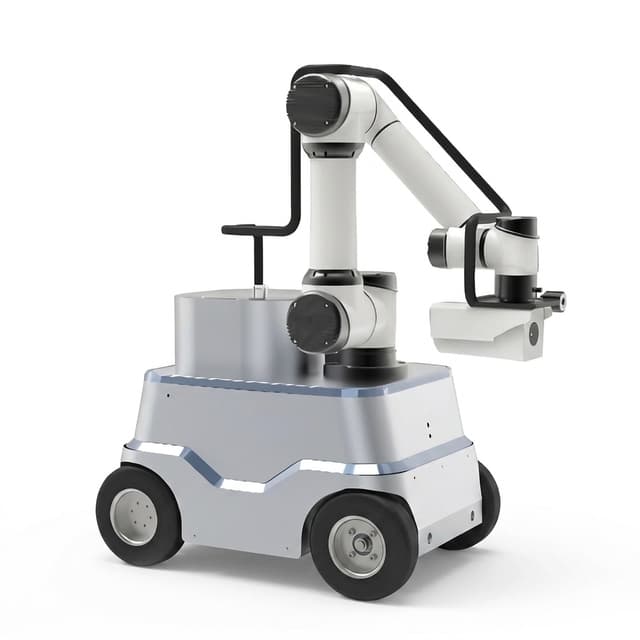
Solution Comparison Snapshot

SolutionPrimary Buyer FocusKey MetricWhy It Matters
Humanoid Robot Joint SystemsBest for humanoid robotics teams defining architecture, sample plan, and supplier qualification criteria.Power Density: Joint-class dependentDirectly influences robot mass distribution and dynamic stability.
Quadruped Robot Leg ActuationBest for teams validating leg-drive performance under dynamic and uneven-terrain conditions.Transient Overload Margin: 2–5x rated torque for <100 ms eventsDetermines reliability under repeated high-impact leg motion during trot and gallop gaits.
Industrial Articulated Robot RetrofitBest for factories upgrading installed robot fleets without full platform replacement.Retrofit Commissioning Time: 2–5 days per axis (standard), 1–2 weeks (complex)Affects production disruption and total transition cost. Must align with factory downtime windows.

Engineering RFQ Email

[email protected]

Email app

Include torque-speed targets, annual volume, and timeline.

Lead Robotics Engineer

+86 18857971991

Talk on WhatsApp

Direct technical conversation with our lead robotics engineer.