
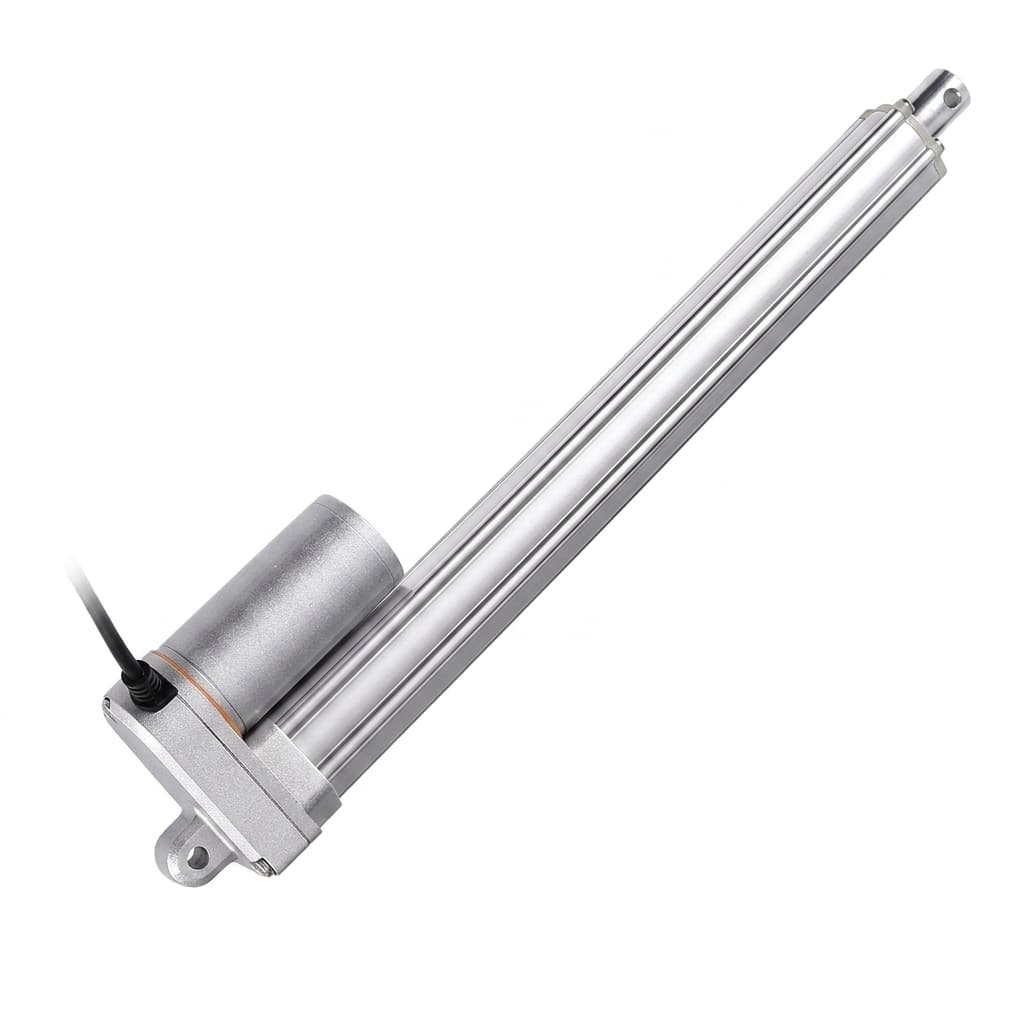
Robot Joint Actuator RFQ Template: 25 Fields Buyers Should Send
A buyer-grade RFQ template with 25 mandatory fields, supplier red flag checklist, complete fill-in example, quote-comparison matrix, and timeline expectations to reduce rework and speed supplier evaluation.
Key Takeaways
- RFQ quality determines quote quality. Most delays come from missing technical fields, not supplier response speed.
- This template covers 25 mandatory fields across 5 categories: project context, mechanical/motion, electrical/control, validation/quality, and commercial/delivery.
- Expect a qualified supplier to return a technical response in 3–5 business days and a formal quote in 7–10 business days. If no response after 14 days, deprioritize.
- Watch for supplier red flags: quotes without technical assumptions, peak-only torque claims, and missing revision control.
Why Most RFQs Produce Weak Quotes
In actuator projects, RFQ quality determines quote quality.
Most delays come from missing technical fields, not supplier response speed. If the first RFQ lacks duty profile, thermal boundary, or interface revision, every quote becomes provisional — and every subsequent round of clarification adds 1–2 weeks to the timeline.
Based on our experience processing hundreds of OEM RFQs, the three most common data gaps are:
- No continuous torque at speed — only peak or stall torque is provided, making it impossible to validate thermal feasibility.
- No mechanical interface revision — the supplier builds a sample against an assumed interface, then the buyer rejects it for dimensional mismatch.
- No protocol specification — the supplier quotes an EtherCAT variant while the buyer needs CAN, triggering a re-quote cycle.
25-Field RFQ Template (Copy This)
A. Project Context
| Field | Example | Mandatory |
|---|---|---|
| Product program name | Humanoid arm axis v2 | Yes |
| Application scenario | Shoulder pitch axis | Yes |
| Project stage | Concept / prototype / pilot / MP | Yes |
| Target SOP date | 2027-Q1 | Yes |
| Destination country | Germany | Yes |
B. Mechanical and Motion Inputs
| Field | Example | Mandatory |
|---|---|---|
| Continuous torque at speed | 68 Nm @ 52 RPM | Yes |
| Peak torque and duration | 140 Nm, 1.2 s, <10% duty | Yes |
| Motion profile | Frequent reversal + dwell | Yes |
| Gear ratio expectation | 80:1 to 120:1 | Yes |
| Backlash limit | <= 8 arcmin under defined method | Yes |
| Shaft/flange drawing revision | DWG-R3 | Yes |
| Envelope limit | Dia <= 145 mm, length <= 210 mm | Yes |
C. Electrical and Control Inputs
| Field | Example | Mandatory |
|---|---|---|
| Bus voltage | 48 VDC | Yes |
| Protocol | EtherCAT | Yes |
| Feedback requirement | Absolute multi-turn | Yes |
| Harness/connector constraint | 2.0 m, M23 keyed | Yes |
| Functional safety expectation | System-level integration intent | Optional |
D. Validation and Quality Inputs
| Field | Example | Mandatory |
|---|---|---|
| Prototype acceptance criteria | Torque, backlash, thermal, noise | Yes |
| Sample size for validation | 6 sets | Yes |
| Required evidence package | Test report + traceability per QA process | Yes |
| Compliance file expectation | CE/RoHS/ISO support scope | Yes |
| Engineering change process | Revision control with effective lot | Yes |
E. Commercial and Delivery Inputs
| Field | Example | Mandatory |
|---|---|---|
| Prototype quantity | 12 sets | Yes |
| Annual demand forecast | 2,500 sets/year | Yes |
| Incoterm preference | FOB / EXW | Yes |
| Target ship window | 6–8 weeks after PO | Yes |
| Packaging requirement | Export carton + anti-vibration inserts | Yes |
| Contact owner | Name + email + role | Yes |
Complete Fill-In Example: Humanoid Shoulder Axis
Here is a realistic example showing how a buyer would fill in all 25 fields for a humanoid robot shoulder pitch joint:
| Field | Filled Value |
|---|---|
| Program name | Atlas-Next Shoulder Module |
| Application | Shoulder pitch axis, 50 kg humanoid platform |
| Stage | Prototype (EVT phase) |
| SOP target | 2027-Q2 |
| Destination | South Korea |
| Continuous torque | 45 Nm @ 25 RPM |
| Peak torque | 110 Nm, 0.8 s, < 5% duty |
| Motion profile | Sinusoidal reversal, 120° range |
| Ratio | 100:1 (harmonic) |
| Backlash | ≤ 1 arcmin, full reversal under 20% load |
| Interface revision | DWG-SH-R2, ISO 9409 flange |
| Envelope | Dia ≤ 110 mm, length ≤ 85 mm |
| Voltage | 48 VDC |
| Protocol | EtherCAT (CoE), CSP mode required |
| Feedback | 20-bit absolute single-turn |
| Connector | 1.5 m pigtail, M12 8-pin |
| Safety | STO input required |
| Acceptance criteria | Torque, backlash, thermal rise < 35°C, noise < 55 dB |
| Sample size | 8 sets (6 for integration + 2 for destructive test) |
| Evidence | Full test report + batch traceability |
| Compliance | CE + RoHS + REACH declaration |
| ECO process | Revision-controlled with lot-effective dating |
| Prototype qty | 8 sets |
| Annual forecast | 3,000 sets/year starting 2028 |
| Incoterm | DDP Incheon |
| Ship window | 8 weeks after PO |
| Packaging | ESD bag + foam insert + export carton |
| Contact | Park Joon-ho, [email protected], Mech Lead |
Visual Handoff Map
Expected Response Timeline
| Milestone | Expected Timeframe | Action If Late |
|---|---|---|
| Initial technical acknowledgment | 1–2 business days | Follow up; supplier may have missed the RFQ |
| Technical questions/clarifications | 3–5 business days | Normal — a supplier who asks good questions is engaged |
| Formal quotation with assumptions | 7–10 business days | If delayed, request a status update with expected date |
| No response after 14 days | — | Deprioritize this supplier; move remaining candidates forward |
Buyer note: A qualified supplier will ask clarification questions. If a supplier returns a quote within 24 hours with zero questions, it likely contains hidden assumptions that will surface during prototype.
Supplier Red Flags to Watch
When evaluating supplier quotes, these patterns indicate potential downstream risk:
| Red Flag | What It Signals | What to Do |
|---|---|---|
| Quote lists only peak torque, not continuous | Thermal performance may be overstated | Request continuous T-N curve at your duty cycle |
| No technical assumptions documented | Supplier will claim misunderstanding later | Reject the quote and request assumption disclosure |
| "Similar model" recommended without data | Fit has not been verified against your specs | Request dimensional and performance comparison table |
| No revision control on quoted drawing | Interface mismatch risk during sampling | Require drawing revision tag in quote confirmation |
| Lead time stated without tooling/NRE breakdown | Hidden costs will appear after PO | Request itemized cost structure |
| Compliance scope listed as "available on request" | Documents may not exist yet | Request proof of current certificate validity |
Quote Comparison Matrix (Use During Supplier Review)
| Review Dimension | Supplier A | Supplier B | Supplier C |
|---|---|---|---|
| Data completeness score (0-10) | |||
| Continuous torque margin adequacy | |||
| Backlash test condition transparency | |||
| Thermal evidence credibility | |||
| Change control clarity | |||
| Lead-time assumption clarity | |||
| Compliance package alignment | |||
| Red flag count | 0 / 1 / 2+ | 0 / 1 / 2+ | 0 / 1 / 2+ |
| Overall risk flag | Low / Mid / High | Low / Mid / High | Low / Mid / High |
First Email Skeleton (Ready to Send)
Subject: RFQ - Robot Joint Actuator Program [Project Name]

Hello Robot Joint Actuator Team,

Please review our RFQ baseline below and advise recommended models:
- Application:
- Continuous torque at speed:
- Peak torque duty:
- Backlash target:
- Protocol / voltage:
- Mechanical revision:
- Prototype quantity / SOP target:
- Compliance package expectation:

Please return model recommendation, lead-time assumptions, and validation test scope.
Practical Rule
Do not start commercial negotiation until the technical baseline is frozen. Otherwise, every price update will be accompanied by a hidden technical assumption shift.
Next Steps
After you receive quotes and shortlist suppliers:
- Use the Selection Guide weighted matrix to rank candidates objectively.
- Plan your validation with the 12-gate prototype-to-MP execution model.
- Review OEM customization capabilities to understand what changes are feasible.
- Start a gated discussion through Contact / RFQ.
Author

Categories
More Posts
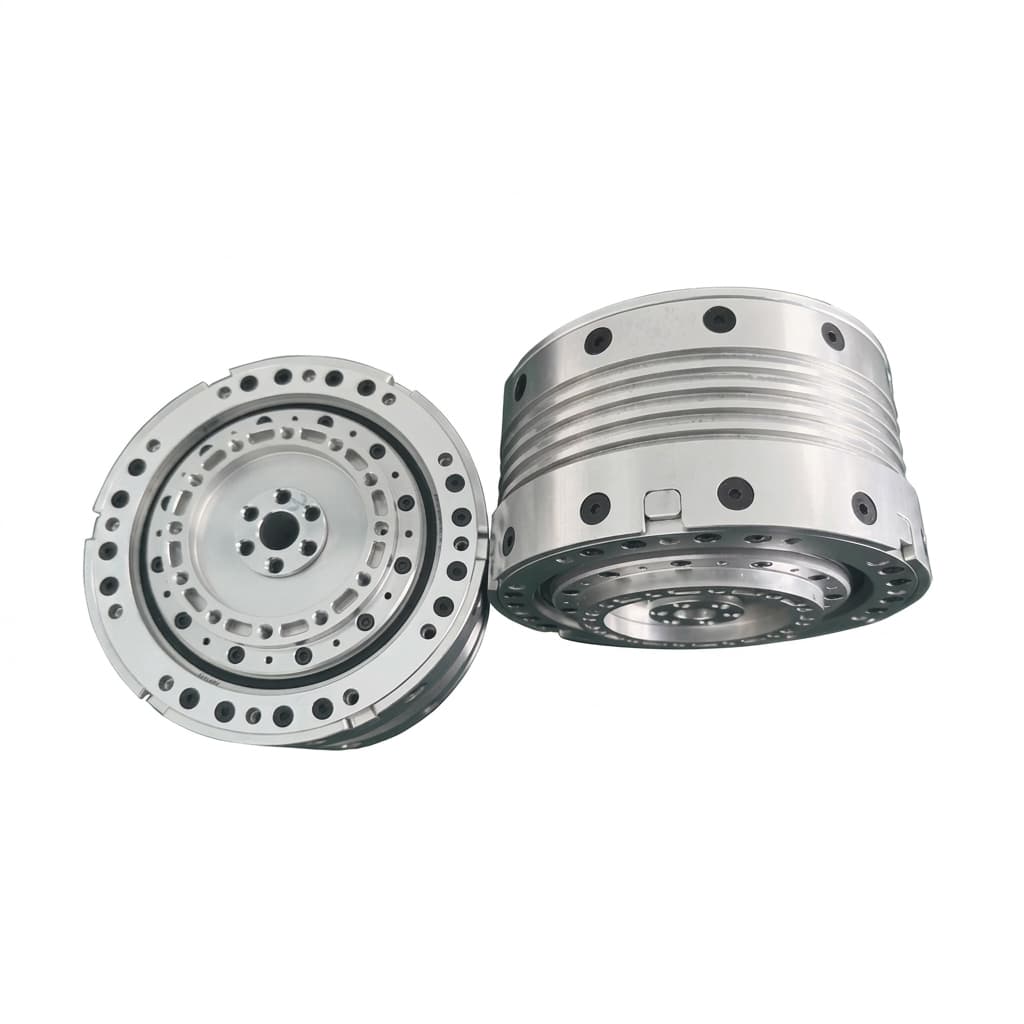
Robot Joint Actuator Selection Guide for OEM Buyers (2026)
A practical selection framework covering reducer type comparison, torque-speed reality checks, backlash/stiffness targets, thermal margins, and RFQ-ready data for robot joint actuator programs.
Functional Safety (SIL 3 / PL e) in Robot Joint Actuators: A 2026 Guide
Use this 2026 guide to evaluate SIL 3 / PL e robot joint actuators, STO/FSoE requirements, procurement checks, and RFQ questions for global cobot OEMs.
Thermal Derating in IP67 Sealed Robot Joint Actuators: What Datasheets Hide (2026)
Engineering guide to thermal derating in sealed robot joint actuators: IP67 torque loss, supplier datasheet checks, RFQ questions, and test limits.