
Strain Wave vs Cycloidal Drives in Robot Joints: Precision vs Robustness
Compare strain wave and cycloidal drives for robot joint actuators by backlash, shock load, torque density, cost, service life, and RFQ fit before sourcing.
Key Takeaways
- For robot joint actuators, the right reducer choice depends on the required positioning error budget, expected shock load, envelope, duty cycle, and sourcing risk, not only on the advertised peak torque.
- The Primary Trade-off: Strain wave (harmonic) drives dominate where zero backlash and compact size are critical (e.g., surgical robots, cobots). Cycloidal drives are chosen when shock resistance and high torque density are paramount (e.g., industrial arm base joints, legged robots).
- Shock Tolerance Differences: The thin flexspline in a strain wave drive is vulnerable to high impact loads and torque spikes. Cycloidal drives use multi-tooth rolling contact, making them highly resistant to shock.
- Cost Implications: Strain wave drives typically command a higher price point due to the precision machining required for the flexspline, whereas cycloidal drives can be more cost-effective for heavy-duty applications.
- Procurement Strategy: Do not over-spec. If your application can tolerate 1-3 arc-minutes of backlash, a cycloidal drive might save significant budget and increase joint lifespan under rough conditions.
RFQ shortcut: If you are comparing reducers this week, ask suppliers to quote against the same output torque, allowable backlash, shock factor, envelope, duty cycle, encoder target, and annual volume. Otherwise, a "cheaper" reducer quote may simply be missing the hardest operating condition.
Scope and Decision Boundary
This guide (updated 2026-07-26) is designed for global OEM procurement teams and engineers evaluating the core transmission technology for robot joint actuators. The choice between a strain wave and a cycloidal drive fundamentally dictates the actuator's form factor, weight, cost, and durability.
Use a strain wave drive when your robot requires true zero-backlash, extreme repeatability, and a lightweight profile. Use a cycloidal drive when the joint will experience high dynamic loads, impact shocks, or requires maximum torque density in a robust package.
The ranges below are buyer-screening ranges, not guaranteed datasheet values. Final selection still needs model-specific confirmation for reduction ratio, rated torque, emergency stop torque, stiffness, backlash after running-in, lubrication, temperature rise, mounting rigidity, and supplier test method.
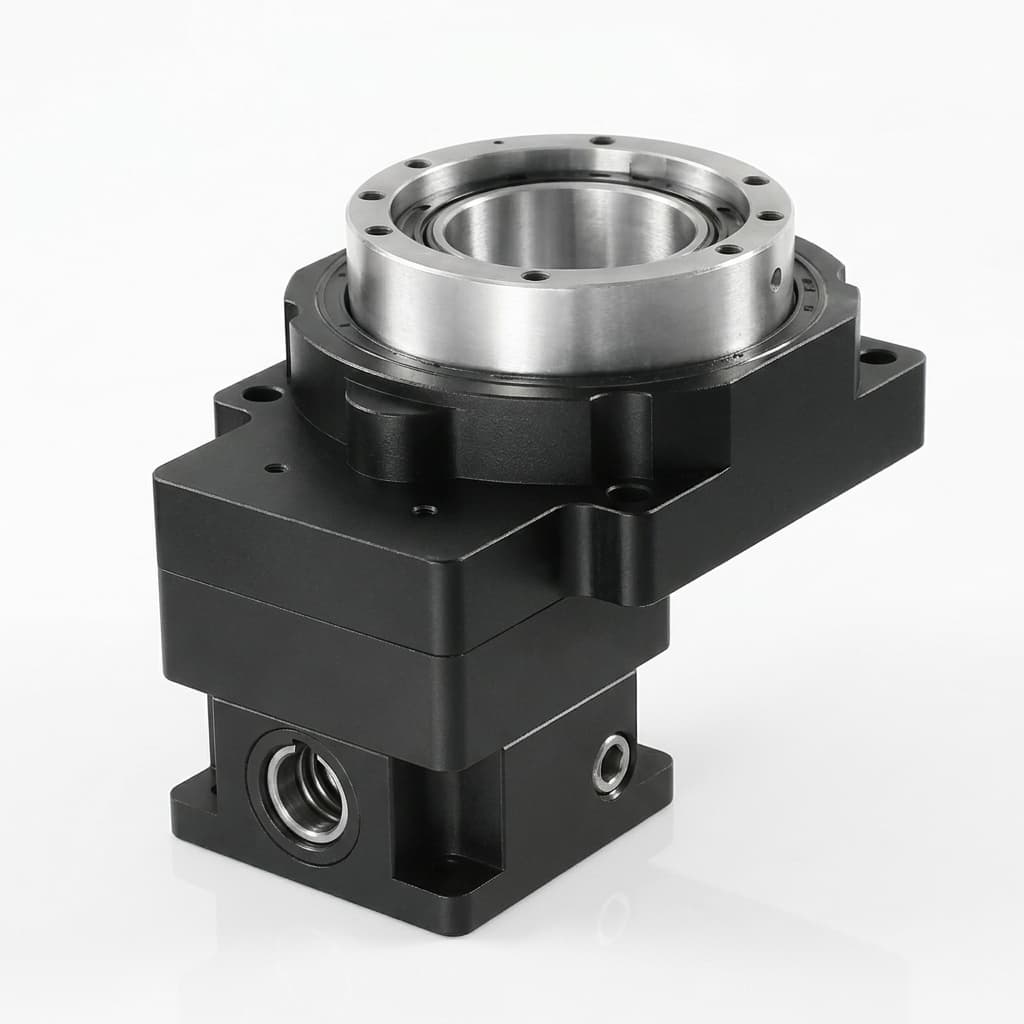
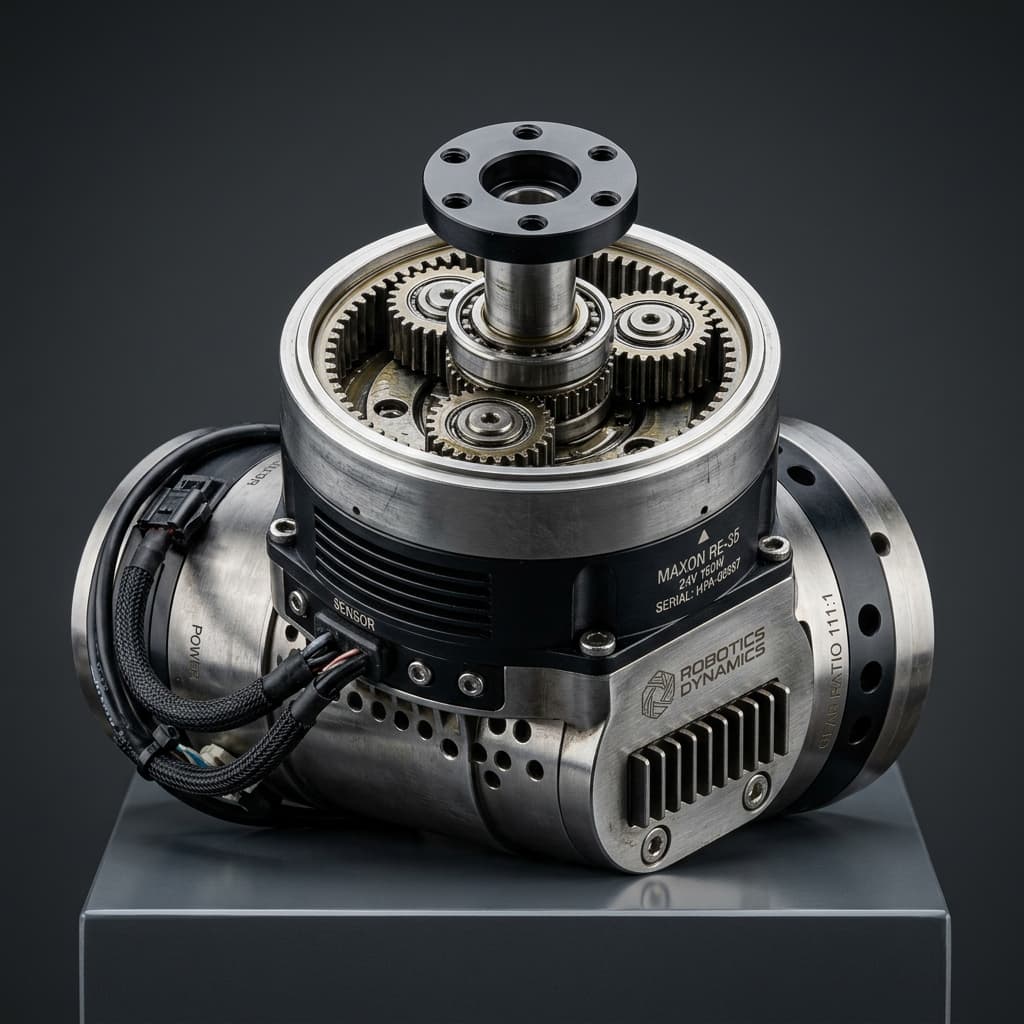
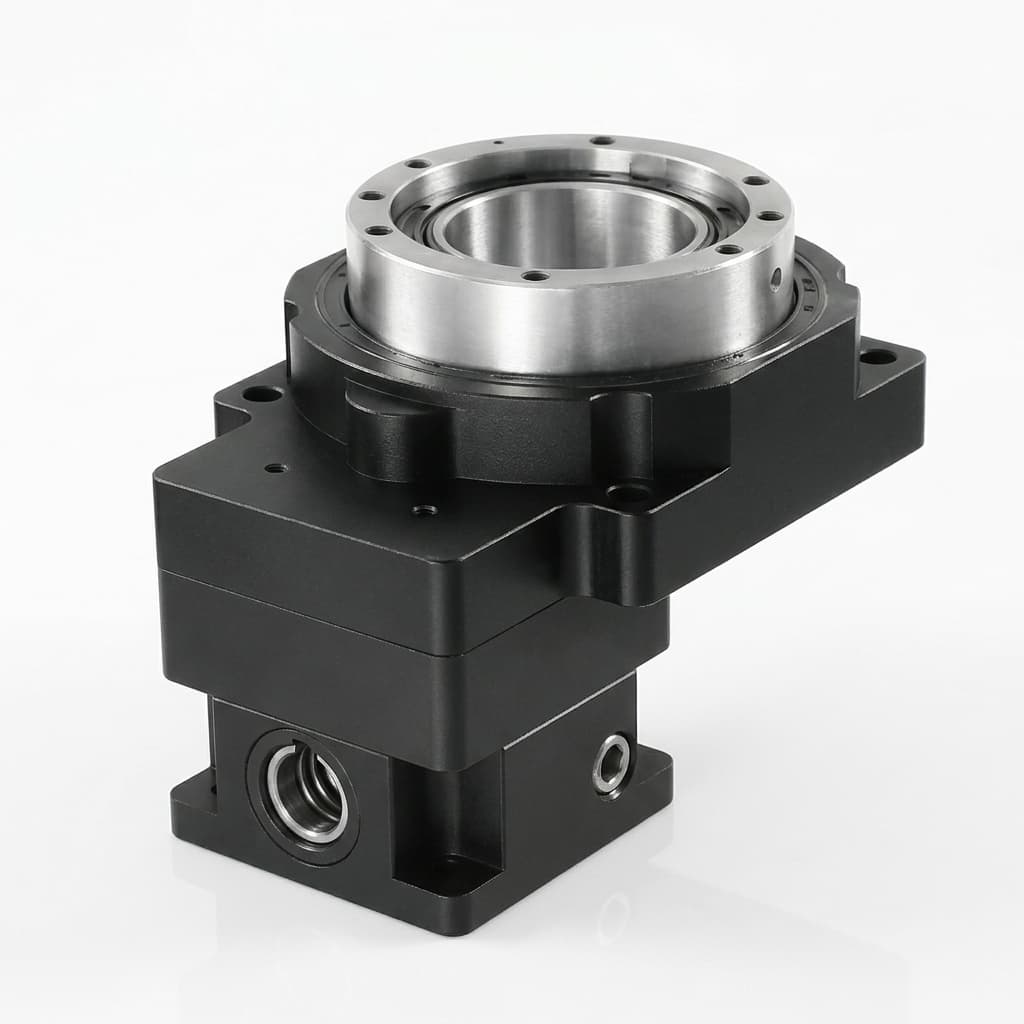 Fig 1: A typical robot joint actuator utilizing a strain wave (harmonic) reducer for compact precision.
Mechanical Principles
Strain Wave (Harmonic) Drives
Strain wave drives rely on the elastic deformation of metal. A wave generator (an elliptical cam) rotates inside a flexible metal cup (the flexspline) with external teeth. The flexspline meshes with a rigid circular spline (internal teeth). Because the flexspline has slightly fewer teeth (usually two less) than the circular spline, one full rotation of the wave generator advances the flexspline by two teeth, creating a high reduction ratio in a single, compact stage.
- Pros: True zero backlash, extremely compact, high reduction ratios in one stage.
- Cons: Susceptible to material fatigue, vulnerable to shock loads, slight torsional wind-up at low torques.
Cycloidal Drives
Cycloidal drives use an eccentric shaft to drive a cycloidal disc around a ring of fixed pins. The disc has cycloidal-shaped lobes that roll smoothly against the pins. The motion is extracted via output pins.
- Pros: Excellent shock load capacity (due to distributed force across multiple lobes/pins), very high torque density, long service life.
- Cons: Not "zero" backlash (though very low), can be slightly bulkier, potential for vibration if not perfectly balanced.
 Fig 2: A robust cycloidal reducer designed for high-torque, high-impact robotic joints.
Comprehensive Comparison Table
When evaluating quotes or datasheets from suppliers, use this baseline comparison (based on typical 2026 industry standards) to ensure you are comparing apples to apples.
| Feature | Strain Wave (Harmonic) Drive | Cycloidal Drive |
|---|---|---|
| Backlash | True Zero (0 arc-sec) | Very Low (typically 1-3 arc-min) |
| Shock Load Capacity | Moderate (Flexspline is the weak point) | Excellent (Multi-point rolling contact) |
| Torque-to-Weight Ratio | Good | Excellent |
| Reduction Ratios (Single Stage) | 30:1 to 320:1 | 10:1 to 100:1+ |
| Torsional Stiffness | Lower (exhibits wind-up at low loads) | High (very rigid) |
| Primary Applications | Cobots, surgical, precision optics | Industrial arms, AGVs, legged robots |
| Relative Cost | Premium | Moderate to Premium |
Selection Matrix for RFQ Shortlisting
Use this matrix before supplier outreach so purchasing, controls, and mechanical teams score the same risk.
| Decision Condition | Prefer Strain Wave | Prefer Cycloidal | Evidence to Request |
|---|---|---|---|
| Backlash budget is below 1 arc-minute | Strong fit | Possible only with preload or special design | Backlash test method, after-run-in data, lost motion curve |
| Repeated impact or emergency-stop torque is expected | Higher fatigue risk | Strong fit | Shock load rating, overload factor, stop-cycle test report |
| Wrist or end-effector joint has tight mass limits | Strong fit | Check envelope carefully | Actuator mass, inertia, hollow-bore diameter, CAD envelope |
| Base, hip, knee, or AGV steering joint carries high moment load | Check stiffness and shock margin | Strong fit | Moment load rating, torsional stiffness, bearing arrangement |
| Controller needs high servo bandwidth with little torsional wind-up | Verify stiffness curve | Usually stronger | Torsional stiffness curve, resonance test, encoder location |
| Budget is constrained but moderate backlash is acceptable | Often over-specified | Stronger sourcing candidate | Quote split for reducer, motor, encoder, brake, and assembly |
| Clean cable routing through the joint is mandatory | Available in hollow-shaft series | Available in hollow-shaft series | Bore diameter, cable bend radius, sealing method, assembly drawing |
Engineering and Procurement Checklist
Before finalizing an RFQ for robot joint actuators, verify the following:
- Define the Backlash Tolerance: Does the application truly require 0 arc-sec backlash? If 2 arc-min is acceptable, cycloidal drives should be evaluated to save cost and increase robustness.
- Analyze Shock Load Scenarios: Will the robot experience sudden impacts (e.g., a quadruped robot landing a jump, or an arm dropping a heavy payload)? If yes, prioritize cycloidal drives.
- Check Weight and Space Constraints: Is the joint situated at the end of a long kinematic chain (like a wrist)? A strain wave drive's compact nature will reduce the lever-arm moment on the base joints.
- Verify Lifecycle Requirements: Ask the supplier for the L10 life calculation under your specific duty cycle. Strain wave drives wear differently (fatigue) than cycloidal drives (bearing wear).
- Review Torsional Stiffness: Ensure your control algorithms can handle the slight "springiness" (wind-up) inherent in strain wave drives, or ensure the cycloidal drive is rigid enough to prevent resonance.
Frequently Asked Questions (FAQ)
Can cycloidal drives achieve zero backlash?
Standard cycloidal drives have very low backlash, but not true zero. However, some high-end manufacturers use pre-loading techniques or specialized multi-disc designs to approach zero backlash, though this increases friction and cost.
Why are strain wave gears so expensive?
The flexspline in a strain wave gear must be machined from high-fatigue-strength specialty steel with incredibly precise tooth profiles. It must deform elastically millions of times without breaking. This metallurgical and machining complexity drives up the price.
Which drive is better for collaborative robots (cobots)?
Strain wave drives are currently the industry standard for cobots because their compact size and zero backlash are ideal for the smooth, precise, and human-safe motions required. Their lower shock tolerance is acceptable since cobots operate at lower speeds.
Can I get a hollow shaft version of both?
Yes. Both strain wave and cycloidal drives can be designed with a central bore (hollow shaft) to allow for internal cable routing, which is essential for modern robot joint actuators.
Is one reducer type always more durable?
No. Cycloidal drives usually have the better shock-load margin, but durability still depends on bearing sizing, lubrication, sealing, duty cycle, mounting stiffness, and how the supplier defines rated torque versus peak torque.
Next Steps
Selecting the right reducer technology is only the first step in specifying a robot joint actuator. You must also consider the motor type, encoder resolution, and braking mechanism.
Ready to evaluate specific solutions? Explore our high-torque rotary actuators and custom robot joint modules to find the perfect balance of precision and robustness for your next robotic platform. Send us your requirements, and our engineering team will help you navigate the strain wave vs. cycloidal decision.
Sources / References
- Laifual Drive. (2026). Strain Wave Gear vs Cycloidal Drive: 2026 Comparison Guide. Retrieved from https://www.laifualdrive.com/blog/strain-wave-gear-vs-cycloidal-drive-difference/
- Harmonic Drive LLC. Harmonic Drive strain wave gear technology. Retrieved from https://www.harmonicdrive.net/technology
- Frontiers in Robotics and AI. (2024). Influences of different parameters on selected properties of gears for robot-like systems. Retrieved from https://www.frontiersin.org/journals/robotics-and-ai/articles/10.3389/frobt.2024.1414238/full
Author

Categories
More Posts
Robot Joint Actuator Selection Guide for OEM Buyers (2026)
A practical selection framework covering reducer type comparison, torque-speed reality checks, backlash/stiffness targets, thermal margins, and RFQ-ready data for robot joint actuator programs.
Prototype to Mass Production: 12 Gate Plan for Joint Actuators
A 12-gate execution model for robot joint actuator programs covering prototype validation, CTQ control, compliance file readiness, and production-release criteria with timeline estimates and cost-of-failure analysis.
Integrated vs. Discrete Robot Joint Actuators: A 2026 TCO and Procurement Guide
Compare integrated vs. discrete robot joint actuators for 2026 TCO, BOM, labor, supply risk, MTTR, and RFQ decisions.