
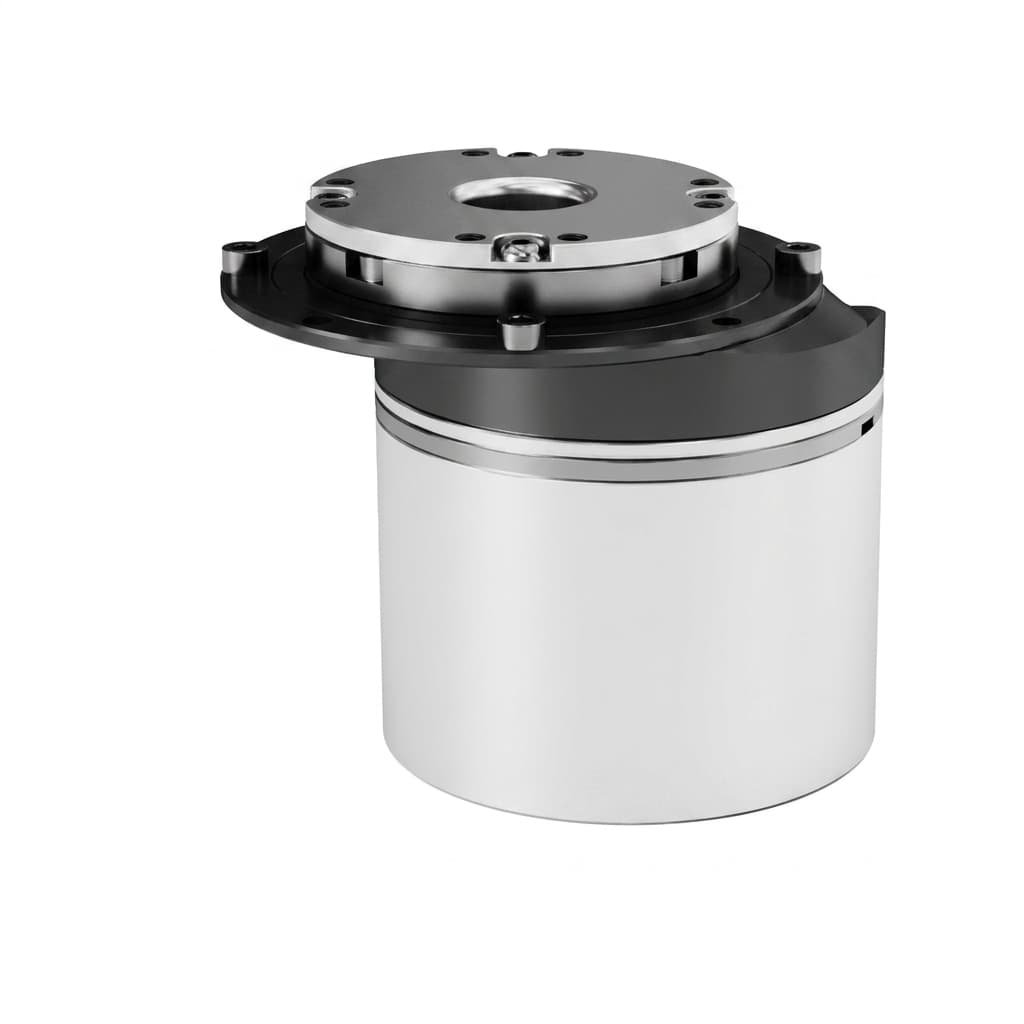
TCO Analysis for Robot Joint Actuators: Hidden Costs Beyond the BOM
Use this 2026 robot joint actuator TCO guide to price integration, tuning, yield, warranty, downtime, spares, and supplier risk before issuing an RFQ.
Key Takeaways
- BOM cost is only one planning line item in a robot joint actuator program; engineering labor, tuning, yield loss, field service, and downtime can exceed the visible hardware price when production scales.
- Procurement teams in 2026 are shifting to Total Cost of Ownership (TCO) models to evaluate suppliers, especially for high-volume deployments such as collaborative robots (cobots) and humanoids.
- Using pre-integrated, factory-calibrated actuator modules can reduce many hours of firmware tuning, mechanical assembly, and EMI troubleshooting.
- Always require suppliers to define their thermal derating curves—an actuator that fails to maintain torque at 60°C will drive up warranty costs.
- In stress-test scenarios with tuning loops, yield loss, spares, and downtime, 5-year TCO can reach 2.5x to 3.5x the initial hardware price; simple lab rigs or low-duty prototypes may be lower.
Short on RFQ time? Start with the robot joint actuator selection guide, compare integrated vs. discrete actuator architectures, then use this article to price lifecycle risk before contacting suppliers.
How to Use This TCO Model
This is a procurement and engineering planning model for global OEM programs, especially cobots, humanoids, quadrupeds, mobile manipulators, and industrial automation cells. It is most useful before an RFQ, supplier shortlist, prototype build, or cost-down review.
It is not a universal benchmark. Replace the planning ranges below with your own labor rates, duty cycle, ambient temperature, factory yield data, warranty history, and downtime cost. Aerospace, defense, medical, subsea, explosive-atmosphere, or safety-certified robots need a separate compliance and risk model.
Use this formula as the working baseline:
5-year joint TCO = purchase cost + integration labor + tooling + scrap/rework + certification/EMI fixes + spares + field service + downtime exposure
The percentages and hour estimates in this article are scenario ranges for RFQ screening. They should trigger supplier questions, not replace supplier test reports or your own validation runs.
The TCO Iceberg: What You Pay vs. What It Costs
When sourcing robot joint actuators, the initial Purchase Order (PO) price or Bill of Materials (BOM) cost is easy to quantify. However, focusing solely on this number often leads to severe margin erosion during the engineering, manufacturing, and deployment phases. Industry sources on robot arm cost and robotics component markets point to the same practical issue: purchase price is only one part of lifetime cost.
We categorize the Total Cost of Ownership (TCO) into five major pillars:
- Upfront Component Cost (The visible BOM): The sticker price of the motor, harmonic drive or planetary gear, encoder, and servo drive.
- Integration & Engineering Labor (Firmware, tuning, and mechanical adaptation): The R&D hours spent designing housings, writing control algorithms, and mitigating resonance.
- Manufacturing & Testing (Yield rates, calibration time per unit): The cost of assembly errors, end-of-line (EOL) testing, and scraping defective builds.
- Lifecycle & Warranty (Field failures, maintenance downtime): The ongoing expense of replacements, software updates, and lost productivity due to unplanned downtime.
- Software Ecosystems & Diagnostics: The tools available for predictive maintenance and real-time monitoring.
TCO Visualization: The Hidden Costs
In-Depth Analysis: The Five Pillars of Actuator TCO
1. Upfront Component Cost
This is the most straightforward aspect of TCO. For discrete designs, buyers issue separate POs for frameless motors, harmonic reducers, absolute encoders, and servo drives. For integrated modules, there is a single PO. While the integrated module frequently has a higher sticker price than the raw discrete parts, it transfers the burden of assembly, testing, and risk from the buyer to the supplier. Use the integrated vs. discrete robot joint actuator guide when the purchase team needs a deeper architecture comparison.
2. Integration and Engineering Labor
The engineering labor required to integrate discrete components is often severely underestimated. It involves:
- Mechanical Design: Designing custom housings to ensure perfect concentricity between the motor and the reducer. A misalignment of even a few microns can cause premature wear.
- Electrical Routing: Designing slip rings or internal cable routing to prevent wire fatigue and Electromagnetic Interference (EMI) between the high-current motor phases and the sensitive encoder signals.
- Firmware Tuning: Writing compensation algorithms to handle resonance, backlash, and torque ripple. Integrated modules arrive factory-calibrated, allowing engineering teams to focus on robot kinematics and higher-level software rather than low-level joint tuning.
3. Manufacturing and Testing (Yield Rates)
When assembling discrete joints in-house, manufacturing teams face significant yield challenges. Assembling a harmonic drive requires cleanroom conditions and specialized alignment tooling. Minor errors result in high friction, noise, or outright failure. If a company builds 1,000 robots and experiences a 10% yield loss on joint assemblies, the cost of scrapped components and rework labor quickly eclipses any savings achieved on the initial BOM. High-quality integrated modules should arrive with End-of-Line (EOL) test evidence from the supplier's facility before shipping; ask whether pass-rate claims are measured per joint, per batch, or per completed robot.
4. Lifecycle, Warranty, and Downtime
In production environments (e.g., automotive assembly lines, logistics fulfillment centers), the cost of unplanned downtime is catastrophic. If a robot joint fails prematurely due to thermal overload or bearing fatigue, the cost includes:
- The replacement joint.
- The field service technician's travel and labor.
- The lost revenue from stopped production. Integrated modules can lower field risk when their thermal dissipation, mechanical tolerances, and EOL test records are engineered as a cohesive system rather than a patchwork of disparate parts.
5. Software Ecosystems and Diagnostics
Modern robotics is as much about software as it is about hardware. When calculating TCO, the tools available for diagnosing joint health are paramount. Integrated actuator suppliers increasingly offer advanced software suites that monitor vibration, temperature anomalies, and current draw in real-time. This enables predictive maintenance, allowing operators to replace a joint during scheduled downtime rather than suffering a catastrophic failure mid-production. For discrete builds, developing this level of diagnostic software requires a dedicated team of data scientists and controls engineers, adding massive hidden costs to the project lifecycle.
Boundaries and Specifications: When to Choose Integrated vs. Discrete
Not every project requires integrated modules, but understanding the boundaries is critical for making a TCO-positive decision.
- Use Discrete Components When: You are building a highly specialized, low-volume robot (e.g., aerospace, deep-sea exploration) where weight, form factor, or extreme environmental requirements mandate a completely custom mechanical design. You have a very large and highly specialized mechanical engineering team capable of micro-tolerance design.
- Use Integrated Modules When: You are scaling production of cobots, quadruped dogs, humanoid robots, or industrial automation where time-to-market, reliability, and volume manufacturing are the primary drivers. You want your engineers focused on AI, vision systems, and kinematics rather than hardware debugging.
Specification Dimensions to Verify
To ensure you are not buying a "cheap" actuator that will fail in the field, verify these dimensions. For a broader pre-screening workflow, pair this section with the robot joint actuator selection guide.
- Nominal vs. Peak Torque: Ensure the nominal torque covers your standard operating conditions. Peak torque should only be used for momentary acceleration.
- Thermal Derating: Ask for the performance curve at 40°C, 50°C, and 60°C ambient.
- Backlash: Confirm not just initial backlash, but expected backlash after 5,000 and 10,000 hours of operation.
- Communication Latency: Check the update rate for EtherCAT or CANopen to ensure it meets your control loop requirements.
- Absolute vs Incremental Encoding: Ensure absolute encoding is present to avoid time-consuming homing routines on every boot cycle.
Engineering Decision Table: Discrete vs. Integrated Modules
The following table breaks down the comprehensive decision matrix for procurement and engineering teams, covering all essential evaluation criteria.
| Cost / Decision Category | Discrete Components (DIY Assembly) | Integrated Actuator Modules | TCO Impact & Strategic Value |
|---|---|---|---|
| BOM Purchase Price | Lower upfront cost ($$) | Higher upfront cost ($$$) | Discrete appears cheaper on the initial PO, but shifts risk internally. |
| Mechanical Assembly | Requires cleanroom discipline, alignment tooling, and skilled labor. | Bolted directly to the robot arm via standard flanges. | Integrated can save several assembly and inspection hours per joint when the flange, bearing stack, and encoder alignment are already validated. |
| Servo & Firmware Tuning | Multiple tuning loops per robot design iteration. | Factory calibrated; plug-and-play communication. | High engineering cost for Discrete; Integrated speeds time-to-market when the supplier exposes usable drive parameters. |
| EMI / EMC Testing | High risk of signal noise requiring PCB respins. | Shielding & routing pre-solved within the metal housing. | Integrated avoids costly delays in EMC certification. |
| Production Yield | Lower and more variable when assembly is manual or tooling is immature. | Higher predictability when every joint ships with EOL data. | Discrete creates expensive scrap; Integrated provides more predictable COGS if supplier quality data is auditable. |
| Thermal Management | Buyer must design custom heatsinks and thermal paths. | Thermal dissipation optimized for the specific motor/housing. | Integrated reduces the risk of field failures due to overheating. |
| Supplier Communication | Requires managing 4+ vendors (motor, gear, encoder, drive). | Single point of contact for the entire joint. | Integrated drastically reduces supply chain overhead and finger-pointing. |
| Warranty & Field Risk | High risk (thermal/backlash inconsistencies). | Low risk (guaranteed performance specs from one vendor). | Lifecycle cost heavily favors Integrated modules over multi-vendor DIY. |
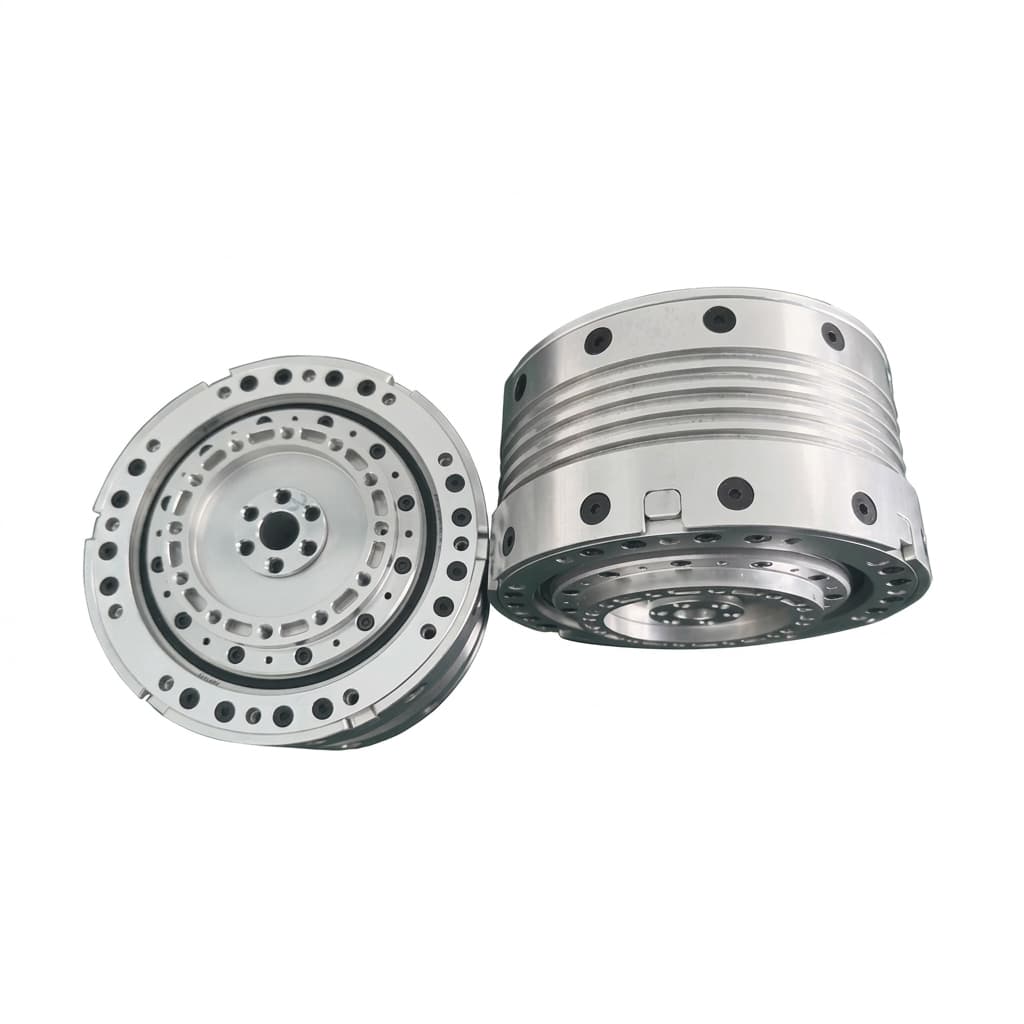
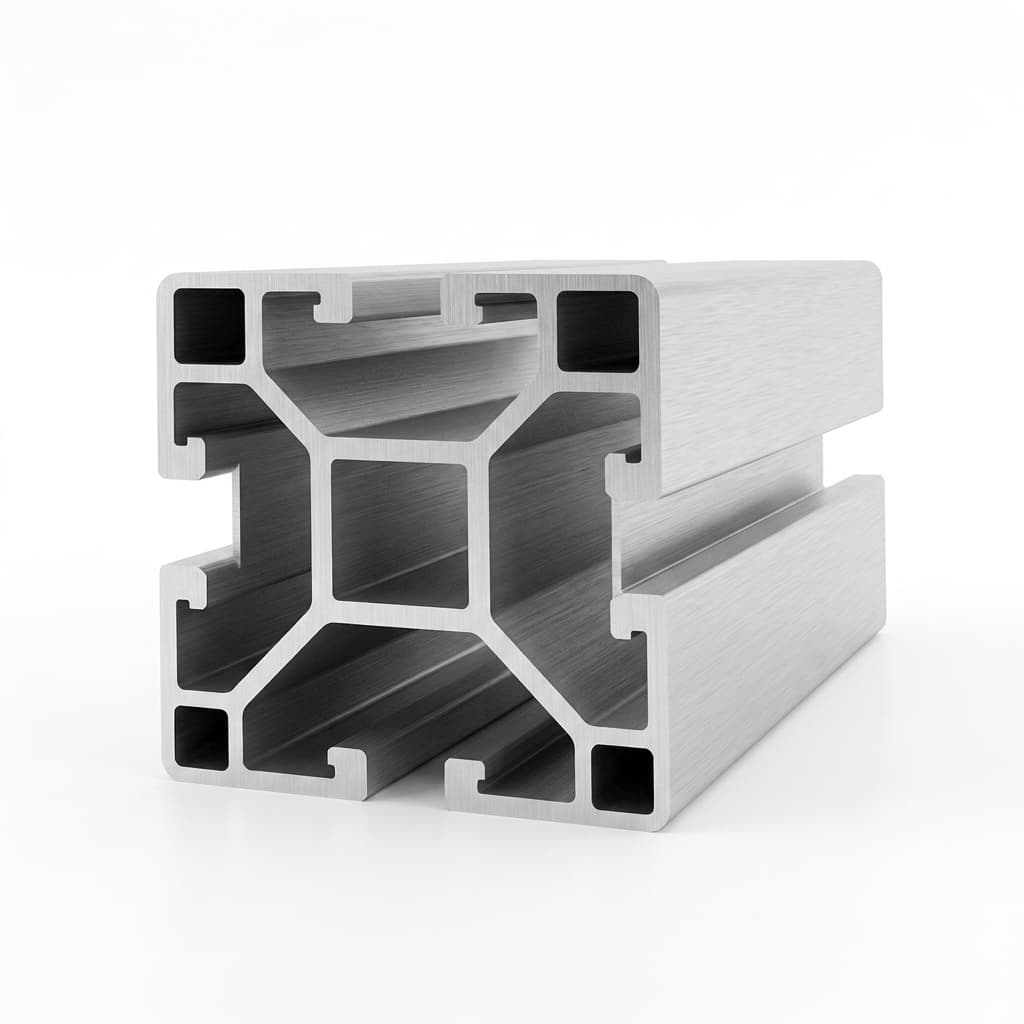 Rigorous torque and thermal testing before shipment eliminates hidden lifecycle costs. (Note: Using automated test benches ensures consistency across batches.)
Hidden Failure Risks and Buyer Decision Points
Procurement teams must be vigilant about the following failure risks that drastically inflate TCO:
Thermal Derating Failures
Many low-cost suppliers advertise "peak torque" based on open-air, 25°C environments. When these actuators are installed inside a sealed robot arm, they rapidly overheat, triggering thermal protection. The cost to redesign the robot's thermal management—or the cost of replacing field failures—far outweighs the savings on the initial actuator purchase. Buyer Decision Point: Always demand continuous torque ratings at your actual operating ambient temperature (e.g., 45°C inside a factory). The thermal derating guide for sealed robot joints explains how to turn this into a supplier test request.
Backlash Degradation over Time
Harmonic drives naturally experience wear. If a supplier uses low-quality metallurgy, the initial low-backlash performance may degrade to 2-3 arcmin after just 1,000 hours. This loss of precision requires either constant software compensation updates (increasing engineering burden) or physical replacement (increasing maintenance costs). Buyer Decision Point: Require lifecycle test data validating backlash stability over at least 5,000 hours.
Encoder Signal Loss (EMI)
Electromagnetic interference from the high-current motor phases can disrupt the delicate signals of absolute encoders if not properly shielded. In discrete builds, this often surfaces late in the prototyping phase, requiring expensive PCB respins and custom shielded cabling. Buyer Decision Point: Opt for integrated modules with internal shielding and differential signaling to guarantee EMI immunity.
Robot Joint Actuator Procurement Checklist
Before issuing an RFQ (Request for Quotation) or selecting a supplier, use this TCO-focused checklist to ensure you are capturing the true cost of the actuator and communicating effectively with vendors. If you need a structured document, start from the robot joint actuator RFQ template.
- Thermal Validation: Are torque specifications rated for continuous operation at our target ambient temperature (e.g., 40-50°C), not just room temperature?
- Calibration & Homing: Does the supplier provide a factory-calibrated absolute multi-turn encoder, or do we need to perform complex homing routines on every startup?
- Communication Protocol: Is the required fieldbus (e.g., EtherCAT, CANopen, RS485) natively supported by the internal driver, or is an external gateway/converter required?
- Lifespan Guarantee: What is the supplier's guaranteed backlash over a 10,000-hour lifespan? Do they have accelerated life testing (ALT) data to prove it?
- Quality Control (EOL): Does the supplier provide an End-of-Line (EOL) test report (torque ripple, friction, noise) for every individual serial number shipped?
- Supply Chain Resilience: Can the supplier support regionalized stocking or dual-sourcing to mitigate geopolitical supply chain risks and shipping delays?
- Supplier Communication Field: Is there a dedicated Field Application Engineer (FAE) assigned to our account for rapid firmware troubleshooting?
FAQ: Real Questions from Robotics Buyers
Q: Why are integrated robot joint modules more expensive than buying the parts separately? A: Integrated modules include the cost of precision assembly, dynamic balancing, servo tuning, and End-of-Line testing. While the initial PO price is higher, the TCO is significantly lower because it eliminates your internal engineering labor, reduces scrap rates, and accelerates your time-to-market.
Q: How does backlash degradation affect TCO in the long run? A: If an actuator's backlash increases significantly after 2,000 hours, the robot loses its repeatability. For precision tasks like welding or pick-and-place, this means defective products. The robot requires either software compensation updates or physical joint replacement, driving up field service costs and causing production downtime.
Q: What is the most common hidden cost in robot actuator procurement? A: EMI (Electromagnetic Interference) troubleshooting and mechanical alignment. Poorly shielded internal cabling between the motor and encoder can cause erratic behavior, while slight misalignments in DIY assemblies cause premature gear wear. Both delay time-to-market by weeks or months.
Q: How do integrated joints affect the overall payload capacity of the robot? A: Integrated joints are often optimized for power density. Because the housing is designed to serve both structural and thermal dissipation roles simultaneously, integrated modules can sometimes be lighter and more compact than an equivalent discrete assembly, thereby improving the robot's payload-to-weight ratio.
Q: What specific questions should I ask suppliers about thermal ratings? A: Do not accept a single "Rated Torque" number. Ask for the continuous torque curve at 25°C, 40°C, and 60°C. Furthermore, ask whether the rating assumes the actuator is mounted to a large metallic heat sink (like a massive robot base) or operating in free air.
Q: Can we achieve IP67 or IP68 ratings with discrete components? A: Achieving high ingress protection (IP) ratings with discrete components is challenging. Sealing the rotating shafts and cable entry points requires custom gaskets, O-rings, and extensive environmental testing. Some integrated actuators can be purchased with pre-validated IP67/IP68 designs, reducing your R&D timeline and certification cost for washdown or outdoor applications.
Q: How does the choice of gear technology (Harmonic vs. Planetary) impact TCO? A: Harmonic drives offer very low backlash and high precision, but are more expensive and vulnerable to shock loads, potentially increasing replacement costs in high-impact applications. Planetary gears are more robust and cost-effective but have higher backlash. Choosing the wrong gear technology for your application will either inflate your initial BOM (over-specifying) or inflate your maintenance costs (under-specifying).
Q: Does buying integrated modules lock us into a single vendor ecosystem? A: Not necessarily, provided you select actuators that use standard communication protocols like EtherCAT (CiA 402 standard) or CANopen. Avoid proprietary serial protocols that force you to use only that vendor's master controller.
Partner for Long-Term Reliability
Reducing your Total Cost of Ownership requires an actuator partner that understands the entire robotics lifecycle—from rapid prototyping to high-volume deployment. Moving beyond the BOM cost allows procurement and engineering to align on what truly matters: reliable, scalable, and profitable robot fleets.
Our integrated robot joint actuators are delivered fully tuned, thermally validated, and backed by comprehensive End-of-Line test data—saving your engineering team hundreds of hours and ensuring predictable costs. Review our robot joint actuator product families and engineering resources before shortlisting options.
Ready to eliminate hidden integration costs? Contact our engineering team to discuss your next robot joint actuator program, or request our detailed technical specifications and 3D CAD models.
Sources & References
- Mecademic, Understanding the True Cost of a Robot Arm. Available at: https://www.mecademic.com/en/understanding-the-true-cost-of-a-robot-arm
- Interact Analysis, Component Market for Industrial and Service Robots. Available at: https://interactanalysis.com/research/components-in-robotics/
- Strategic Market Research, Robotic Actuator Market Report. Available at: https://www.strategicmarketresearch.com/market-report/robotic-actuator-market
Author

Categories
More Posts
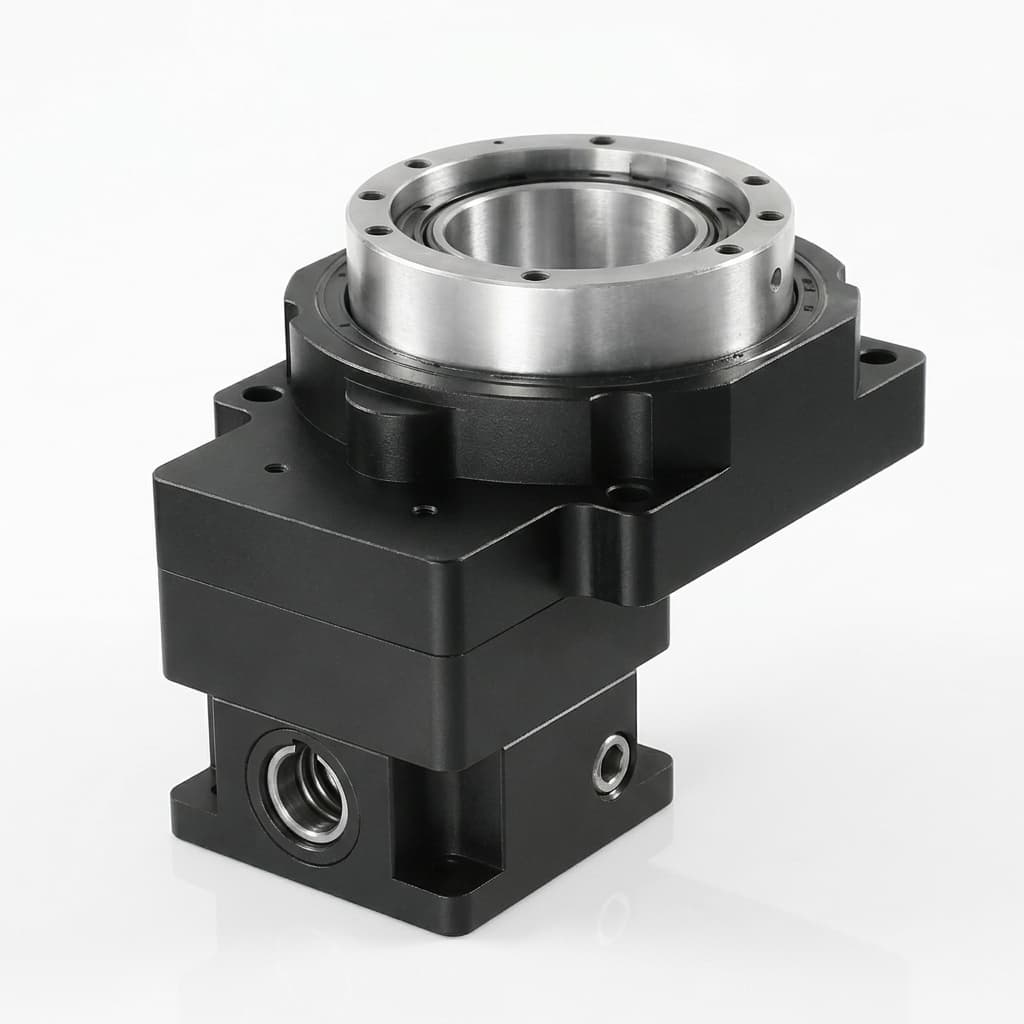
Strain Wave vs Cycloidal Drives in Robot Joints: Precision vs Robustness
Compare strain wave and cycloidal drives for robot joint actuators by backlash, shock load, torque density, cost, service life, and RFQ fit before sourcing.
Robot Joint Actuator RFQ Template: 25 Fields Buyers Should Send
A buyer-grade RFQ template with 25 mandatory fields, supplier red flag checklist, complete fill-in example, quote-comparison matrix, and timeline expectations to reduce rework and speed supplier evaluation.
Robot Joint Actuator Selection Guide for OEM Buyers (2026)
A practical selection framework covering reducer type comparison, torque-speed reality checks, backlash/stiffness targets, thermal margins, and RFQ-ready data for robot joint actuator programs.